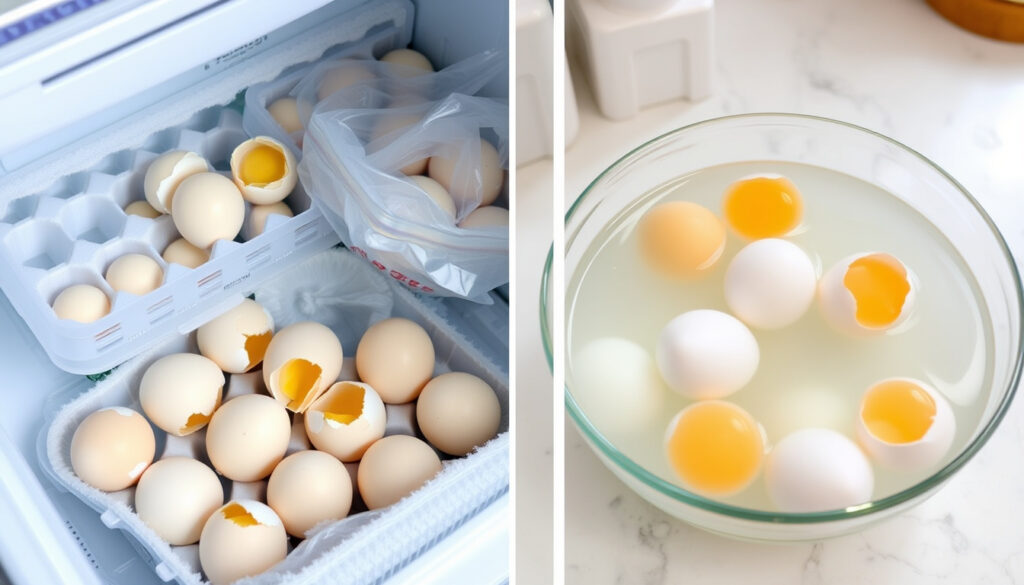
Can You Freeze Eggs? Best Methods for Storage & Thawing
If you’ve ever cracked a dozen eggs only to watch half go yellow before you could use them, you already know the appeal of freezing them. This guide cuts through the confusion: USDA-backed timelines, practical methods from egg producers and extension services, and what to expect when you thaw. By the end, you’ll know exactly which approach works for your kitchen.
Maximum freezing time: up to 1 year · Recommended use within: 4 months for acceptable quality, 2 months for best results · Shell compatibility: No · Cooked egg viability: Poor
Quick snapshot
- Shells crack during freezing — always remove before freezing (Pete & Gerry’s)
- USDA permits freezing eggs for up to 1 year (Incredible Egg – American Egg Board)
- Thawed eggs thicken — add water or milk to thin (Forks in the Dirt)
- Exact texture variance depends on recipe and preparation method (SimplyCanning)
- Performance difference between farm-fresh and store-bought frozen eggs (Valley Food Storage)
- Best quality: use within 2 months (Pete & Gerry’s)
- Absolute maximum: 4 months for acceptable quality, 1 year per USDA (Incredible Egg)
- Freeze-dried eggs: up to 25 years in airtight containers (Valley Food Storage)
- Step-by-step freezing instructions follow for whole eggs, whites, and yolks (NCHFP – University of Georgia)
- Thawing guidance and cooking adjustments included (SimplyCanning)
- Comparison between freezing, water glassing, and other preservation methods (Valley Food Storage)
The specifications below summarize the key parameters for freezing eggs, drawn from USDA guidance and egg industry sources.
| Specification | Value |
|---|---|
| Freezing limit | 12 months |
| Freshness window | 4 months |
| Best quality window | 2 months |
| Shell compatibility | No |
| Cooked egg viability | Poor |
| IVF storage | Indefinite until use |
| Thawed whole eggs use-by | 24 hours |
| One whole egg equivalent | 1/4 cup or 50 g |
| One egg white equivalent | 2 tbsp or 30 g |
| Water-glassed eggs storage | 9 months to 1 year at below 50°F |
| Freeze-dried eggs storage | 25 years in airtight containers |
Can you freeze eggs still in the shell?
Never freeze eggs in their shells. When water inside an egg freezes, it expands roughly 9% in volume — enough to fracture the shell from the inside out. The egg whites turn grainy and watery, and the , making the egg impractical for most uses after thawing. This is not a quality issue you can cook around; the structure damage is irreversible.
Beyond texture, there’s a food safety consideration. Cracked shells expose the egg contents to air and any contaminants present in your freezer. Even if the crack is small, you lose the protective barrier that keeps pathogens at bay.
Freezing destroys shell integrity entirely — once thawed, you cannot return eggs to their shells or use them the way you would a fresh egg. Budget for this consequence if you freeze in-shell out of habit.
What happens when you freeze eggs in the shell?
- Egg whites expand during freezing, rupturing the shell
- Yolks become thick and gummy after thawing
- Cracked shells allow bacterial contamination
Forks in the Dirt notes that the expansion pressure is constant — even eggs frozen briefly will show damage. The only safe method is to remove the contents before freezing.
How long can you freeze eggs in their shell?
You cannot freeze eggs in their shells, but you can freeze shell-freeze eggs for up to 1 year according to USDA guidance. For best quality, use them within 2 months. The National Center for Home Food Preservation (research from University of Georgia) recommends labeling each container with the freeze date so you can track storage time accurately.
What is the best way to freeze fresh eggs?
Freezing eggs properly means choosing between whole eggs, whites only, or yolks only — each requires different handling. Whole eggs must be beaten before freezing or the yolks turn gummy. Yolks need a stabilizer (salt, sugar, or corn syrup) to prevent them from thickening into an unusable paste. Whites freeze unbeaten with no special treatment.
The National Center for Home Food Preservation recommends adding 1.5 tablespoons of sugar, 1.5 tablespoons of corn syrup, or half a teaspoon of salt per cup of whole eggs to keep yolks smooth after thawing. Without these additives, the yolks coagulate into a rubbery mass.
The stabilizer you choose depends on your intended use: sugar for baking sweet goods, salt for savory dishes. Adding the wrong type can alter flavor — salt in a sweet batter is noticeable, and sugar in an otherwise savory scramble is distracting.
Freezing whole eggs
Crack each egg into a bowl and beat with a fork until the whites and yolks are fully combined — avoid whisking in air. Pour the mixture into silicone ice cube trays, with each compartment holding about 3 tablespoons (roughly one large egg equivalent). Freeze until solid, then transfer to freezer bags for long-term storage. One-quarter cup or 50 grams of beaten mixture equals one large whole egg.
Freezing egg whites and yolks separately
Egg whites freeze best unbeaten. Portion them into freezer bags or containers — 2 tablespoons or 30 grams equals one large egg white. Label with the date. Yolks require more care: combine with your chosen stabilizer before freezing. SimplyCanning recommends silicone molds for easy removal, though standard ice cube trays work if you grease them lightly.
- Whites: freeze unbeaten, portion as needed
- Yolks: combine with 1.5 tbsp sugar or 0.5 tsp salt per cup before freezing
- Use freezer bags laid flat to save space
Can you freeze eggs in a carton?
The original carton is not designed for freezing — the cardboard absorbs moisture and the eggs can crack if the carton shifts. Transfer eggs to silicone molds, freezer bags, or airtight containers instead. SimplyCanning notes that freezing beaten eggs in quart-size freezer bags laid flat is a reliable secondary method that works well for meal prep.
Do eggs taste good after freezing?
Frozen eggs taste fine when used correctly — the flavor compounds survive the freezing process. What changes is texture. Freezing causes proteins to partially denature, and the effect makes thawed eggs thicker than fresh ones. Forks in the Dirt explains that thawed whole eggs thicken noticeably, requiring two to three times as much water or milk to thin them for scrambles or omelets.
The taste itself depends on how you use the eggs afterward. Baked goods handle texture changes well — the structure of cookies, cakes, and breads masks the slight density difference. Fried eggs are where the quality gap becomes obvious, which is why most sources recommend saving thawed eggs for cooking applications where texture matters less.
Texture changes after thawing
- Whole eggs become noticeably thicker after thawing
- Yolks without stabilizer turn gummy and rubbery
- Whites may lose some volume when beaten after thawing
- Thawed egg whites beat to better volume if allowed to sit at room temperature for about 30 minutes before whipping (Incredible Egg)
Best uses for frozen eggs
Frozen eggs excel in baked goods, casseroles, and dishes where the eggs are mixed with other ingredients and cooked thoroughly. SimplyCanning notes that frozen eggs work well for baking with or without additional thinning. Scrambled eggs and omelets are possible if you adjust liquid ratios and expect a denser result.
The key is matching the egg’s new texture profile to an appropriate recipe. A frittata with added vegetables and cheese hides the density better than a plain scramble. Cookie dough is essentially unaffected by the textural change.
Is there a downside to freezing eggs?
The main downsides are texture changes and a shorter usability window after thawing. Once thawed, you have 24 hours to use whole eggs and egg whites before they spoil — this clock runs in the refrigerator, not from the freezer. You cannot refreeze thawed eggs safely.
Beyond timing, freezing is a one-way door for texture. The National Center for Home Food Preservation warns that freezing eggs without beating causes irreversible yolk damage. Even beaten eggs suffer minor quality degradation with each month in the freezer.
Quality loss over time
- Best quality: 2 months or less of storage
- Acceptable quality: up to 4 months
- USDA maximum: 1 year (quality continues to decline after 4 months)
- Yolk texture degrades faster than whites
Thawing precautions
Thaw eggs overnight in the refrigerator — never in the microwave. Microwaving partial cooks the eggs from the inside out, creating a rubbery, uneven texture that cannot be reversed. SimplyCanning emphasizes that slow thawing in the refrigerator preserves the and prevents hot spots that cook portions of the egg.
Forks in the Dirt adds that a cold water bath (submerging the sealed container in cold water, changing the water every 30 minutes) works faster than refrigerator thawing if you’re in a hurry, but still avoids the temperature spikes that microwaving causes.
Thawed frozen eggs must only be used in dishes that are thoroughly cooked. The American Egg Board advises against using them in recipes where eggs remain runny or undercooked — the freezing and thawing process alters protein structure in ways that affect food safety in lightly cooked applications.
Can you freeze cooked eggs?
Cooked eggs freeze poorly, with one notable exception. Hard-boiled whole eggs and hard-boiled egg whites become tough and watery when frozen — the proteins contract and squeeze out moisture, leaving a spongy, unpleasant texture that no amount of reheating fixes. Incredible Egg confirms this explicitly: do not freeze hard-boiled eggs whole or whites alone.
Hard-boiled egg yolks are the exception. According to the American Egg Board, you can freeze hard-boiled yolks for use as toppings or garnishes. The key is to boil them in hot water for 12 minutes before freezing — this pre-cooking stabilizes the enough to survive the freeze-thaw cycle without becoming rubbery.
Can you freeze boiled eggs?
No, not whole boiled eggs or boiled egg whites. The protein structure changes during cooking make them especially vulnerable to moisture loss during freezing. Once frozen and thawed, a hard-boiled egg becomes mealy and dry — unpleasant to eat and difficult to incorporate into recipes.
Can you freeze scrambled eggs?
Technically, yes — but the results are disappointing for most uses. SimplyCanning notes that pre-cooked scrambled eggs can be frozen in bags for later use, but expect a dense, slightly rubbery product. The means freezing adds little practical value over freezing raw eggs, and you lose the versatility of having raw beaten eggs ready for any recipe.
If you do freeze scrambled eggs, cool them completely and portion into freezer bags. Label with the date and intended use (a specific recipe works better than treating them as a raw egg substitute).
Upsides
- Extends egg shelf-life significantly (up to 1 year)
- Reduces food waste when you have surplus eggs
- Baking performance is largely unaffected
- Meal prep friendly — portion by ice cube
- Egg whites freeze unbeaten without additives
Downsides
- Texture becomes noticeably thicker after thawing
- Only 24 hours to use after thawing
- Cannot refreeze thawed eggs
- Shells must be removed before freezing
- Hard-boiled eggs (whole and whites) should not be frozen
Step-by-step freezing process
The practical steps below cover the three main approaches: whole eggs, separated whites, and stabilized yolks. Each method is adapted from guidance by the National Center for Home Food Preservation and egg industry sources.
- Prepare your containers. Silicone ice cube trays work best for portioning, according to SimplyCanning — eggs release cleanly without sticking. Alternatively, use small freezer bags or airtight containers.
- Crack each egg into a bowl. Inspect for blood spots or unusual appearance. Discard any eggs with damaged shells or off smells before freezing.
- Choose your method:
- Whole eggs: beat with a fork until combined, no air incorporation
- Egg whites: crack carefully, let whites drain into bowl, discard yolks
- Yolks: crack and separate, add stabilizer (1.5 tbsp sugar or 0.5 tsp salt per cup of yolks)
- Pour into containers. One ice cube compartment holds about 3 tablespoons, roughly one large egg equivalent. Label each compartment or bag with the quantity.
- Add date labels. SimplyCanning recommends writing both the freeze date and the intended use-by date (4 months for best quality, 1 year maximum per USDA).
- Freeze until solid. Transfer to freezer bags after solidifying to save space and prevent freezer burn.
- Thaw in refrigerator overnight. Alternatively, place sealed container in cold water bath, changing water every 30 minutes until thawed.
- Use within 24 hours. Whole eggs and egg whites spoil faster after thawing than fresh eggs.
Silicone molds are worth the investment for regular egg freezers — the easy release alone makes them preferable to standard trays. Labeling with dates is non-negotiable: quality degrades noticeably after 4 months, and you’ll thank yourself for the reminder when you pull a bag from the back of the freezer next winter.
Beyond traditional freezing, Valley Food Storage covers alternative preservation methods worth noting for context. Water glassing (submerging eggs in a solution of sodium silicate or pickling lime) extends shelf-life to 9 months to 1 year at temperatures below 50°F — longer than freezing with no texture impact. Thermostabilizing eggs at 130°F for 15 minutes kills bacteria and allows storage for 8 months at 34°F. Freeze-dried eggs in airtight containers last up to 25 years, though the cost and equipment required make this practical only for emergency preparedness.
“Eggs can be frozen for up to one year, although it is recommended to use them within 4 months for best quality. Thaw overnight in the refrigerator.”
— Incredible Egg (American Egg Board)
“You can freeze whole eggs, yolks, and whites. Break each separately and beat until combined. Label each container with the date and quantity.”
— National Center for Home Food Preservation (University of Georgia)
“Water glassing with sodium silicate or pickling lime can preserve eggs for up to 9 months to 1 year at temperatures below 50°F — longer than freezing with no texture impact.”
— Valley Food Storage
Related reading: How to Plant Potatoes · What Foods Neutralize Stomach Acid Immediately
Related coverage: eggs fridge shelf life fördjupar bilden av How Long Do Eggs Last in the Fridge – Shelf Life and Storage Guide.
Frequently asked questions
How long can eggs be frozen for IVF?
Medical egg freezing (vitrification) is a different process entirely. Eggs preserved for fertility treatment do not age further while frozen — vitrification stops all biological activity. Food egg freezing guidelines (1 year maximum) do not apply to medical freezing, where storage duration is effectively indefinite.
What is the 5 5 5 rule for eggs?
The 5-5-5 rule is a refrigerator storage guideline, not a freezing rule. It means eggs stay safe for 5 weeks beyond the pack date, in the coldest part of the fridge, at 5°F or below. Freezing extends shelf-life far beyond this, but the 5-5-5 rule has no application to frozen egg storage.
Can you freeze eggs in a carton?
Cartons are not designed for freezing. Transfer eggs to silicone molds, freezer bags, or airtight containers. The original packaging absorbs moisture, and shifting eggs can crack even frozen ones.
How to thaw frozen eggs safely?
Thaw overnight in the refrigerator or in a cold water bath, changing water every 30 minutes. Never use the microwave — it partially cooks the eggs and ruins texture. Use thawed eggs within 24 hours and only in thoroughly cooked dishes.
Are frozen eggs safe to eat?
Frozen eggs are safe to eat when properly handled. The freezing process halts bacterial growth, and thawing in the refrigerator prevents contamination. However, thawed eggs must be cooked thoroughly — do not use them in recipes calling for raw or lightly cooked eggs.
What containers to use for freezing eggs?
Silicone ice cube trays are preferred for portioning (easy release). Freezer bags work well for storing portions long-term (lay flat to save space). Airtight containers are a budget alternative. Label every container with freeze date and quantity.
Can you freeze raw egg whites only?
Yes. Egg whites freeze unbeaten without any additives. Portion them into freezer bags or containers at 2 tablespoons (one large egg white equivalent). Label with the date and use within 4 months for best quality.
For home cooks, the trade-off is clear: freeze eggs properly or accept that they belong in the baking aisle only. Bakers win with freezing — scrambled egg enthusiasts lose. Knowing which outcome matches your kitchen habits decides whether the effort pays off.
More related posts
 Val Kilmer Cause of Death: Pneumonia and Throat Cancer Link
 Milwaukee Bucks vs Sacramento Kings Match Player Stats
 What Is a Hedge Fund – Definition, Strategies, Fees and Risks
 What Is Whole Life Insurance? How It Works, Pros & Cons
 Symptoms of Low Iron: 10 Common and Unexpected Signs
 Ford Mustang Mach-E 2026: Price, Specs & Crowd Killer Myth
 Hysterectomy: Types, Recovery, Risks, and What to Expect