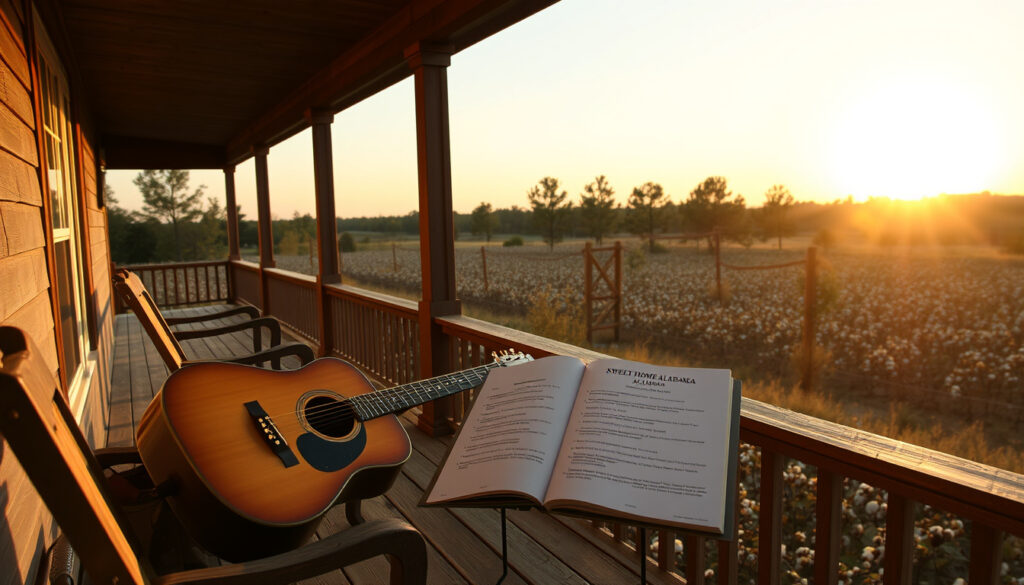
Sweet Home Alabama Lyrics – Full Text, Meaning & Controversy
Few songs in American rock history have sparked as much debate as Lynyrd Skynyrd’s “Sweet Home Alabama.” Lynyrd Skynyrd released this track in 1974, and it became an instant classic with its memorable guitar riff and defiant chorus. Yet beneath the surface of Southern pride lies a complex web of artistic intent, political context, and ongoing interpretation that continues to divide listeners more than five decades later.
The song emerged as a direct response to Neil Young’s critical depictions of the South in tracks like “Southern Man” and “Alabama.” Lead singer Ronnie Van Zant and his bandmates crafted lyrics that celebrated their regional identity while simultaneously pushing back against what they perceived as unfair generalization. The result was a song that would become both a Southern rock anthem and a lightning rod for controversy.
Understanding “Sweet Home Alabama” requires examining its musical origins, its charged lyrical content, and the enduring debates surrounding its meaning. From its chart success to its adoption by various political movements, the song represents a fascinating case study in how music can transcend its original context while retaining its capacity to provoke discussion.
What Are the Full Lyrics to Sweet Home Alabama?
The song opens with one of rock’s most recognizable guitar introductions, immediately establishing the track’s Southern rock credentials before a single word is sung. The lyrics that follow blend celebration of the American South with pointed commentary on how the region was perceived by outsiders during the early 1970s.
The Opening Verses and Chorus
The song’s opening lines set the stage for what follows, with Ronnie Van Zant introducing the central themes of regional loyalty and defensive pride:
“Turn it up, come on, turn it up
Little louder, turn it up
Well, I heard Mister Young sing about her
Well, I heard old Neil put her down
Well, I hope Neil Young will remember
A Southern man don’t need him around, anyhow”
The chorus, which has become embedded in American cultural consciousness, delivers its message with unapologetic directness:
“Sweet home Alabama
Where the skies are so blue
Sweet home Alabama
Lord, I’m coming home to you”
The Controversial Middle Verses
The song’s middle section contains the verses that have generated the most debate over the years. These lines reference specific historical events and political figures while drawing comparisons that remain open to interpretation:
“In Birmingham they love the Gov’nor (boo, boo, boo)
Now we all did what we could do
Now Watergate does not bother me
Does your conscience bother you?
Tell the truth”
The Closing Section
The song’s final verses return to the theme of Neil Young criticism while reinforcing the album’s title and the central message of regional loyalty:
“Well, I heard Mister Young sing about her
Well, I heard old Neil put her down
Well, I hope Neil Young will remember
Southern man don’t need him around, anyhow
Sing a little something for you”
Lynyrd Skynyrd
Second Helping (1974)
Van Zant, Rossington, King
4:43
- Written as a direct response to Neil Young’s “Southern Man” and “Alabama” songs
- Band members have consistently stated the lyrics oppose segregation, not racism
- Became the band’s biggest commercial hit and defining signature song
- No official alternate versions with different lyrics exist
- Continues to spark debate about its intended meaning versus actual impact
- Has been covered by numerous artists across various genres
| Fact | Detail |
|---|---|
| Genre | Southern Rock |
| Key | F Major |
| Chart Peak | #8 Billboard Hot 100 |
| RIAA Certification | Multi-Platinum |
| Release Date | June 1974 |
| Album | Second Helping |
| Label | MCA Records |
| Recorded | 1973-1974 |
What Is the Meaning Behind Sweet Home Alabama?
At its core, “Sweet Home Alabama” represents a defense of regional identity against what the band perceived as unfair criticism from outside observers. Ronnie Van Zant and his collaborators crafted the song specifically in response to Neil Young’s condemnations of Southern racism in his own work, particularly the 1970 track “Southern Man” with its stark imagery of “crosses are burning fast.”
The Neil Young Connection
The song’s most direct references address Neil Young’s criticism of the American South. Van Zant took particular umbrage at what he viewed as broad generalizations about Southerners, expressing frustration that an artist from Canada would presume to pass judgment on an entire region’s population. The line “I hope Neil Young will remember / A Southern man don’t need him around” delivers this message with unmistakable clarity.
Band members have elaborated on their intentions in numerous interviews over the years. Van Zant famously explained their position by stating, “We thought Neil was shooting all the ducks in order to kill one or two. We’re Southern rebels but, more than that, we know the difference between right and wrong.” This framing positions the song as a defense of Southerners as individuals capable of moral judgment, rather than a blanket endorsement of regional policies or attitudes.
The song was written during a period of intense national reckoning with civil rights history. Neil Young’s “Southern Man” and “Alabama” addressed the visible legacy of segregation in the Deep South, particularly in Alabama where the civil rights movement had confronted deeply entrenched systems of racial discrimination. The response from Lynyrd Skynyrd reflected a particular Southern perspective that rejected being categorized by the actions of a minority.
The Watergate Parallel
The song’s reference to Watergate serves as a rhetorical counterattack. By juxtaposing Governor George Wallace with the Watergate scandal, the lyrics suggest that Northerners should not presume moral superiority over Southerners. The logic runs that if Northerners are not defined by Richard Nixon’s corruption, then Southerners should not be defined by the actions of segregationist politicians. Producer Al Kooper, who worked with the band on the recording, interpreted “We all did what we could do” as reflecting efforts to oppose Wallace’s political machine.
Why the Controversy Over Sweet Home Alabama Lyrics?
The debate surrounding “Sweet Home Alabama” centers primarily on two elements: the reference to Alabama Governor George Wallace and the question of whether the song endorses or opposes the segregationist policies Wallace represented. This controversy has only intensified over the decades as the song has been adopted by various groups and individuals whose interpretations sometimes conflict sharply with the band’s stated intentions.
The George Wallace Reference
The line mentioning Birmingham and Wallace has generated the most sustained controversy. Birmingham, Alabama was the site of some of the civil rights movement’s most pivotal confrontations, including the 1963 church bombing that killed four young girls. Governor Wallace himself had become a national symbol of segregation following his 1963 inauguration speech declaring “Segregation now, segregation tomorrow, segregation forever.”
George Wallace, as Alabama’s governor, famously opposed desegregation and became one of the most prominent defenders of racial segregation in American politics. His 1963 inaugural address declaring “Segregation now, segregation tomorrow, segregation forever” directly contradicted the emerging civil rights legislation of that era.
Band Members’ Interpretation
Guitarist Gary Rossington has consistently maintained that the “boo, boo, boo” following the Wallace reference indicates disapproval rather than support. “We didn’t [believe in segregation]. We put the ‘boo, boo, boo’ there saying, ‘We don’t like Wallace,’” Rossington explained in interviews. Van Zant reinforced this interpretation, stating directly, “Wallace and I have very little in common. I don’t like what he says about colored people.”
According to producer Al Kooper, the phrase “Now we all did what we could do” was intended to suggest opposition to Wallace’s political dominance, reflecting the perspective of Southerners who had worked to defeat segregationist politics. From this angle, the song expresses the complexity of life in the South during the civil rights era, acknowledging that many residents opposed the prevailing political order.
Conflicting Interpretations
Not everyone shares the band’s reading of the lyrics. Co-writer Ed King offered a notably different perspective in a 2009 interview, characterizing the song as “an unabashed defense of Alabama, and even Wallace,” and noting that early recordings did not include the booing sounds. This contradiction between band members’ accounts has contributed to ongoing uncertainty about the original creative intent.
The discrepancy between Gary Rossington’s statements that the boos indicate disapproval and Ed King’s recollection that the song originally defended Wallace without booing reflects genuine uncertainty about the creative process. What remains clear is that the final released version includes the booing sounds, though their intended meaning remains disputed.
Appropriation by Extremist Groups
Perhaps the most troubling aspect of the song’s legacy involves its adoption by white supremacist organizations. The neo-Nazi band Skrewdriver recorded a cover version that altered the lyrics to explicitly support the Ku Klux Klan. This appropriation has led critics to question whether the song’s ambiguous messaging, regardless of the band’s intentions, creates space for racist interpretations that the original artists never envisioned.
Is Sweet Home Alabama a Racist Song?
The question of whether “Sweet Home Alabama” qualifies as a racist song resists simple yes or no answers. The band’s surviving members have consistently maintained their anti-racist intent, with Rossington affirming in recent interviews, “We’re Southern rebels but, more than that, we know the difference between right and wrong.” Van Zant himself, who died in the 1977 plane crash, made clear in multiple interviews that he opposed segregation and resented Wallace’s policies.
However, the song’s critics argue that its effect, regardless of intent, has been to provide a soundtrack for regional pride that can shade into racial insensitivity. The celebration of the South as an undifferentiated entity, with its “skies so blue,” can obscure the region’s complex history including both the civil rights movement’s victories and the resistance to equality that characterized the Wallace era.
Who Wrote Sweet Home Alabama and Its History?
“Sweet Home Alabama” emerged from a period of creative collaboration among the members of Lynyrd Skynyrd, a band that had already established itself as a leading voice in the emerging Southern rock genre. The songwriting process brought together three of the band’s key contributors, each of whom contributed distinct elements to the final track. For a deeper dive into the song’s origins and meaning, explore the Lana Del Rey Waffle House Alabama.
The Songwriters
The official songwriting credit belongs to Ronnie Van Zant, Gary Rossington, and Ed King. Van Zant provided the lyrics and lead vocals, delivering the song’s narrative with his characteristic working-class Southern drawl. Rossington contributed the iconic guitar riff that opens the track, a musical hook so distinctive that it has become inseparable from the song’s identity. King, who had moved from guitar to bass by this point, helped shape the song’s structure and provided additional musical contributions.
It’s worth noting that despite the song’s title and its celebration of Alabama, Lynyrd Skynyrd was actually based in Jacksonville, Florida, not Alabama. The band had traveled to Muscle Shoals, Alabama for recording sessions at FAME Studios, where they absorbed the distinctive sound of the Muscle Shoals Rhythm Section. This connection to Alabama’s musical heritage, rather than residency, inspired the song’s title and central theme.
Recording and Production
The song was recorded in 1973 at FAME Studios in Muscle Shoals, Alabama, and later overdubbed at other facilities. Producer Al Kooper, who had made his own reputation as a musician with Bob Dylan and others, helped guide the recording. The production aimed to capture the band’s live energy while incorporating the polished arrangements that would make the song accessible to mainstream radio audiences.
Release and Chart Performance
“Sweet Home Alabama” was released as a single in June 1974 and appeared on the album Second Helping, which came out earlier that year. The song reached number eight on the Billboard Hot 100, becoming Lynyrd Skynyrd’s highest-charting single and establishing the band as major commercial performers. The success of the track helped propel Second Helping to become one of the best-selling Southern rock albums of all time.
The song’s commercial success introduced Lynyrd Skynyrd to a national audience that extended far beyond the Southern states. This broader appeal would prove both a blessing and a curse, as the song’s message was absorbed by listeners who sometimes interpreted it in ways that diverged from the band’s original intentions.
Timeline: From Conception to Cultural Icon
- – The initial inspiration for the song emerges after Neil Young releases “Southern Man,” which Ronnie Van Zant and others find offensive in its broad criticism of Southerners. The band begins developing what would become “Sweet Home Alabama” during this period.
- – Lynyrd Skynyrd travels to Muscle Shoals, Alabama to record at FAME Studios. The experience of recording in Alabama and exposure to the Muscle Shoals Sound contributes to the song’s development and final form.
- – “Sweet Home Alabama” is released as a single and appears on the album Second Helping. The track quickly gains radio play and begins climbing the charts.
- – The song reaches number eight on the Billboard Hot 100, cementing Lynyrd Skynyrd’s status as a major commercial act and introducing Southern rock to mainstream audiences nationwide.
- – Ronnie Van Zant and several other band members die in a plane crash. Neil Young, despite the earlier tensions, attends Van Zant’s funeral, marking a poignant end to their artistic disagreement.
- – The song experiences renewed popularity through numerous cover versions and inclusion in films, television shows, and sporting events. Discussions about the song’s controversial elements continue to evolve, particularly in the context of contemporary debates about Confederate symbolism.
Addressing Common Misconceptions
Decades of discussion and debate have generated numerous claims about “Sweet Home Alabama” that require clarification. Separating established facts from speculation helps provide a clearer picture of what the song actually contains and what its creators intended.
| Established Information | Information That Remains Unclear |
|---|---|
| The song was written as a response to Neil Young’s “Southern Man” and “Alabama” | Whether Ed King’s interpretation of Wallace support reflects original intent before band revisions |
| Ronnie Van Zant explicitly stated opposition to segregation in interviews | The exact timeline of lyric changes during the recording process |
| The released version includes booing sounds after Wallace’s name | How Neil Young initially reacted to the song upon its release |
| The song reached #8 on Billboard Hot 100 in 1974 | Whether the song would have been written without Young’s earlier criticism |
| Gary Rossington has consistently stated the boos indicate disapproval | The extent to which contemporary political events influenced specific word choices |
| Ed King described it differently in 2009, calling it a defense of Wallace | Whether surviving band members’ current interpretations reflect original intent or evolved perspective |
Cultural Impact and Analysis
“Sweet Home Alabama” occupies a unique position in American musical history, simultaneously celebrated as a regional anthem and criticized as a problematic artifact of a divided era. Its cultural impact extends far beyond its commercial success, influencing discussions about regional identity, musical appropriation, and the relationship between artistic intent and audience interpretation.
The song’s adoption by diverse audiences reflects the complexity of its meaning. It has been played at sporting events, used in film soundtracks, covered by artists ranging from Broadway performers to heavy metal bands, and continued to generate debate whenever its lyrics are examined in historical context. This persistent cultural relevance suggests that the questions the song raises about regional pride, stereotyping, and historical memory remain meaningful to contemporary audiences.
The reconciliation between Neil Young and Lynyrd Skynyrd following Van Zant’s death added another layer to the song’s legacy. Young attended Van Zant’s funeral and later performed the song live, describing it as an ironic tribute to anti-racism. This post-humous connection between the artist whose criticism inspired the song and the band that responded to it offers a poignant resolution to what had initially appeared to be an irreconcilable artistic disagreement.
Key Quotes and Sources
“We thought Neil was shooting all the ducks in order to kill one or two. We’re Southern rebels but, more than that, we know the difference between right and wrong.”
— Ronnie Van Zant, lead singer of Lynyrd Skynyrd
“We didn’t [believe in segregation]. We put the ‘boo, boo, boo’ there saying, ‘We don’t like Wallace.’”
— Gary Rossington, guitarist
“Wallace and I have very little in common. I don’t like what he says about colored people.”
— Ronnie Van Zant
The information in this article draws on interviews with band members, contemporary accounts of the song’s recording and release, and ongoing critical analysis of its place in American cultural history. Key sources include the band’s own statements, music historians, and the documented historical record regarding the civil rights era in Alabama and the emergence of Southern rock as a distinct genre.
Final Thoughts
“Sweet Home Alabama” remains one of the most recognizable songs in American rock music, its guitar riff and chorus instantly familiar to millions of listeners worldwide. The track’s journey from creative response to cultural touchstone reflects broader tensions in American society about regional identity, historical memory, and the gap between artistic intent and audience reception.
The band’s consistent assertion that the song represents opposition to stereotyping rather than endorsement of segregation provides one framework for understanding it. The actual experience of listeners who have found the song’s celebration of Southern pride to be compatible with more troubling perspectives provides another. Perhaps the song’s most enduring legacy is its demonstration that music can contain multiple, even contradictory meanings simultaneously, continuing to generate discussion decades after its creation.
For those interested in exploring related topics, an examination of how other songs have navigated similar tensions between regional identity and broader moral concerns, such as Puff the Magic Dragon – Debunking the Drug Myth, reveals the diverse ways musicians have addressed complex social themes through their work.
Who sings Sweet Home Alabama?
Lynyrd Skynyrd performs “Sweet Home Alabama.” The band’s lead singer Ronnie Van Zant provided the vocals on the original 1974 recording.
Is Sweet Home Alabama about racism?
The band has consistently stated the song opposes racism and segregation. However, the lyrics’ ambiguity has led to varying interpretations, with some critics arguing the effect of the song supports different conclusions than the stated intent.
What song is Sweet Home Alabama responding to?
The song responds to Neil Young’s “Southern Man” and “Alabama,” which criticized Southern racism. Van Zant and bandmates felt Young was unfairly stereotyping all Southerners.
When was Sweet Home Alabama released?
The song was released in June 1974 as a single and appeared on the album Second Helping, becoming Lynyrd Skynyrd’s biggest hit.
What does the line about George Wallace mean?
The line references Alabama Governor George Wallace, a segregationist. Band members say the “boo, boo, boo” indicates disapproval. The subsequent Watergate reference draws a parallel questioning why all Northerners are not judged by Nixon’s actions.
Are there different versions of Sweet Home Alabama lyrics?
The official released version has remained consistent. Co-writer Ed King suggested early versions differed, with some accounts claiming the Wallace boos were added later. No official alternate versions have been released.
Did Neil Young respond to Sweet Home Alabama?
Neil Young was name-checked in the song as criticism. Despite this, Young later reconciled with the band, attending Ronnie Van Zant’s funeral in 1977 and performing the song live, calling it an ironic tribute to anti-racism.
More related posts
 Can You Freeze Eggs? Best Methods for Storage & Thawing
 Portland Trail Blazers vs Dallas Mavericks Match Player Stats
 What is Section 8? US Housing, UK Law & Slang Explained
 Bed Bath and Beyond Coupon Codes for 2025 Savings
 Thursday Murder Club on Netflix: Movie or Series
 Spider-Man 3 Cast: Complete Actors and Characters List
 Shoe Stores Near Me: Dublin Shops & Podiatrist Tips
 This Is Us Cast – Complete Actors, Roles and Seasons Guide