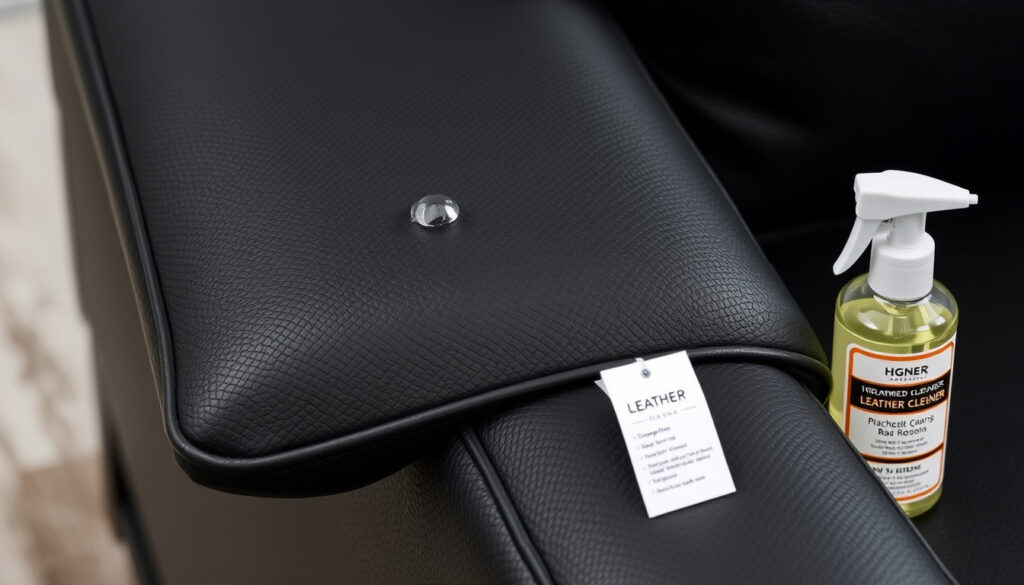
What Is PU Leather? Composition, Quality, Durability & Care
PU leather mimics genuine leather in appearance and cost, yet its polyurethane coating and fabric base create a material that wears out in 2–5 years instead of decades. This article breaks down the material composition, real-world durability, and environmental trade-offs of polyurethane leather, so you can decide where it fits in your home or wardrobe.
Appearance on market: 1960s ·
Primary composition: Polyurethane-coated fabric (polyester or cotton base) ·
Typical durability range: 2–5 years with proper care ·
Vegan status: 100% animal-free ·
Share of global faux leather market (2024 estimate): ~65%
Quick snapshot
- Base fabric: polyester or cotton (Von Baer (premium leather goods manufacturer))
- Coating: polyurethane thermoplastic polymer (ChairOffice (furniture industry resource))
- 100% synthetic, no animal components (ChairOffice) (Von Baer (premium leather goods manufacturer))
- Typical lifespan: 2–5 years (Oxley Hide (leather specialist))
- Peeling and cracking under heat/UV (Manuel Dreesmann (accessories brand))
- High water resistance (Oxley Hide) (Oxley Hide (leather specialist))
- Non-biodegradable (Wikipedia (reference work))
- Petrochemical-based production (ChairOffice) (Wikipedia (reference work))
- Vegan alternative to animal leather (ChairOffice) (Wikipedia (reference work))
- Wipe with damp cloth; avoid harsh chemicals (Von Baer)
- Keep away from direct sunlight and heat (Manuel Dreesmann)
- Condition with specialized products (Von Baer)
Key attributes of PU leather are summarized below.
| Attribute | Details |
|---|---|
| Full name | Polyurethane leather |
| Category | Synthetic faux leather |
| First commercial use | 1960s |
| Common applications | Furniture, apparel, shoes, accessories |
| Recyclability | Generally not recyclable |
| Vegan | Yes |
| Water resistance | High |
What is pu leather made of?
Base fabric materials used
PU leather starts as a woven fabric — most often polyester or cotton. This backing provides the mechanical strength and flexibility. According to Von Baer (premium leather goods manufacturer), the base fabric is then coated with a layer of flexible polyurethane to create the leather-like surface. The choice of base fabric affects the final hand feel and tear resistance: polyester gives more durability, while cotton offers a softer drape.
Polyurethane coating process
The polyurethane coating is applied as a liquid thermoplastic polymer and then cured, forming a continuous film that mimics the grain of animal leather. ChairOffice (furniture industry resource) notes that PU (polyurethane) is a type of plastic, which is why PU leather is fully synthetic. The coating thickness and formulation determine the material’s flexibility and resistance to cracking. Higher-quality PU leather uses multiple thin layers that bond more securely; cheaper versions use a single thick coat that tends to peel faster.
The trade-off: because there is no animal hide involved, the material can be manufactured in consistent rolls with uniform surface texture. But that also means it lacks the natural grain variations and breathability of genuine leather.
The implication: buyers should weigh the cost savings against the shorter replacement cycle.
Is pu leather good quality?
Quality compared to genuine leather
When placed side by side, PU leather generally falls short of full-grain genuine leather in durability and breathability. Oxley Hide (leather specialist) states that PU leather is designed to mimic real leather but lacks its natural aging properties and endurance. However, ChairOffice notes that PU leather can be easier to clean and maintain — a damp cloth is often enough, whereas genuine leather requires specialized conditioners and is prone to staining.
Factors that determine PU leather quality
Not all PU leather is created equal. Quality varies dramatically by manufacturer and price point. Key factors include:
- Coating thickness and layering: Multi-layer coatings with intermediate adhesion reduce peeling.
- Base fabric weave: Higher thread count and tighter weaves improve tear strength.
- UV stabilizers: Added to resist sunlight degradation.
- Surface finish: Embossed grain patterns that are deeper tend to wear longer.
Manuel Dreesmann (accessories brand) advises that even high-quality PU leather will crack and peel with frequent use, reducing its lifespan. The implication: PU leather rarely matches the decade-plus lifespan of well-maintained genuine leather.
Premium PU leather can outlast bonded leather (a mix of leather scraps and polyurethane), but it will never develop the patina of full-grain hide. The buyer must decide: lower upfront cost with a 3–5 year replacement cycle, or a single investment that lasts 20 years.
The pattern: PU leather sits between budget synthetics and premium natural materials, offering a middle path on cost and care.
What is the difference between faux leather and pu leather?
Material composition differences
PU leather is a specific type of faux leather. Von Baer explains that all PU leather is faux leather, but not all faux leather uses polyurethane. The other common variant is PVC (vinyl) leather, which uses a polyvinyl chloride coating. PU leather tends to be more breathable and softer than PVC faux leather, and it is generally considered more eco-friendly because PVC production releases dioxins.
Durability and care differences
In terms of care, both PU and PVC faux leather can be wiped clean with mild soap and water. However, PU leather is less resistant to heat and friction than PVC — it can begin to peel sooner. Oxley Hide notes that PU leather is more water-resistant than genuine leather, but that resistance doesn’t make it waterproof — water can still seep through stitching and edges.
The pattern: if you see “faux leather” on a label, check whether it specifies “polyurethane” or “PVC.” PU is the premium end of the synthetic spectrum; PVC is the budget option.
A jacket labeled “vegan leather” could be PU or PVC. For the consumer, PU offers better breathability and lower toxicity in production, but still requires careful maintenance to avoid premature wear.
What this means: knowing the coating type helps you predict both performance and replacement timing.
How long can pu leather last?
Expected lifespan with normal use
The average PU leather product lasts 2–5 years with typical use, according to Oxley Hide. A well-made PU leather sofa used daily in a climate-controlled home may reach the higher end of that range. Garments and shoes, which undergo more flexing, tend to wear out faster — often within 2–3 years.
Factors that shorten PU leather lifespan
- Heat and direct sunlight: UV radiation breaks down the polyurethane polymer, causing stiffness and cracking.
- Friction: Constant rubbing — such as from denim on a car seat — abrades the coating.
- Improper cleaning: Alcohol-based cleaners dissolve the polyurethane film.
- Repeated bending: Creasing at joints (armrests, shoe toes) stresses the coating and leads to delamination.
Manuel Dreesmann warns that with frequent use, even higher-quality PU leather will show peeling within a year or two. The catch: a lower purchase price versus a shorter replacement cycle.
Should I avoid pu leather?
Environmental impact of PU leather
PU leather is not biodegradable and can release microplastics during washing or disposal, as noted by Wikipedia. Its production relies on petrochemicals, contributing to carbon emissions. On the other hand, it avoids the environmental costs of animal agriculture — land use, methane emissions, and water consumption. For vegan consumers, that trade-off often tilts in PU leather’s favor, though some argue that responsibly sourced genuine leather has a lower long-term environmental footprint if kept for decades.
Toxicity concerns
Some PU leather products may contain phthalates or other plasticizers added to increase flexibility. Look for certifications like OEKO-TEX Standard 100 or REACH compliance, which restrict harmful substances. ChairOffice states that PU leather is generally considered a low-VOC material compared to PVC, but off-gassing during the first weeks of use is possible. For indoor furniture, ensure proper ventilation.
PU leather is not a single material — it spans a wide quality spectrum. A 20-dollar PU wallet and a 500-dollar PU handbag may both be polyurethane-coated fabric, but the handbag uses thicker coating, better base fabric, and more UV stabilizers. The buyer’s decision should be based on the specific product’s construction, not the generic category.
The implication: lower-cost PU items are likely to fail sooner, making the total cost of ownership less attractive.
What destroys pu leather?
Common causes of damage
The three main enemies of PU leather are heat, friction, and harsh chemicals. Prolonged exposure to temperatures above 80°F (27°C) in direct sunlight accelerates polymer breakdown. Friction from sitting, rubbing against rough fabrics, or repeated folding creates micro-tears that widen over time. Oxley Hide lists peeling and cracking as the most common failure modes.
How to prevent peeling and cracking
- Keep PU leather items out of direct sunlight and away from radiators.
- Clean regularly with a soft, damp cloth — no alcohol, bleach, or ammonia.
- Apply a conditioner specifically formulated for synthetic leather every 6–12 months.
- Avoid storing PU leather items folded or under heavy pressure.
According to Von Baer, mild soap and water is the safest cleaning routine. With preventive care, a high-quality PU leather item might reach the upper end of its 2–5 year lifespan.
The pattern: care routines directly influence whether you get 2 or 5 years of use.
Comparison: PU leather vs Genuine leather vs Bonded leather
Three material categories, one core difference: natural vs synthetic composition. The table below shows how they stack up across key attributes.
| Attribute | PU Leather | Genuine Leather (Full-Grain) | Bonded Leather |
|---|---|---|---|
| Material | Polyurethane-coated fabric (ChairOffice) | Animal hide (cow, sheep, goat) (Oxley Hide) | Leather scraps + polyurethane bonding |
| Durability | 2–5 years (Oxley Hide) | 10–20+ years with care | 1–3 years |
| Water resistance | High (Oxley Hide) | Low (absorbs moisture) | Moderate |
| Breathability | Low (Von Baer) | High (natural pores) | Low |
| Cost | Low to moderate | High | Very low |
| Maintenance | Easy (damp cloth) (Von Baer) | Moderate (conditioners, avoid water) | Easy (damp cloth) |
| Lifespan | 2–5 years | 10–20 years | 1–3 years |
| Eco-friendliness | Not biodegradable, petrochemical (Wikipedia) | Biodegradable, animal agriculture impact | Partially recycled scraps |
The pattern: PU leather sits between bonded leather (short-lived) and genuine leather (long-lived), offering a middle path on cost and care. For items that see light use — decorative furniture, occasional bags — PU is adequate. For daily drivers like a sofa or work shoes, genuine leather delivers better return per year of use.
Specifications of PU leather
Five technical specs that define the grade of PU leather.
| Specification | Typical Value |
|---|---|
| Base fabric weight | 150–300 g/m² (polyester or cotton) |
| Coating thickness | 0.1–0.5 mm (single- or multi-layer) |
| Abrasion resistance (Martindale) | 15,000–50,000 rubs (varies by quality) |
| Tensile strength | 20–50 N/mm (dependent on base fabric) |
| Water absorption | <5% (surface coating) |
| Flame retardancy | Often meets CAL 117 standard |
| VOC emissions | <100 µg/m³ (low-VOC formulations) |
| UV resistance | Fair (yellowing after 500–1000 hours) |
The catch: many manufacturers do not publish these specs. A higher price point generally correlates with thicker coating and stronger base fabric, but consumers rarely see the data. Look for brands that cite Martindale rub cycles or OEKO-TEX certification as a proxy for quality.
Pros and Cons of PU Leather
Upsides
- Vegan and animal-free (ChairOffice)
- Easy to clean with damp cloth (Von Baer)
- Water-resistant surface (Oxley Hide)
- Lower cost than genuine leather
- Uniform texture and color availability
Downsides
- Short lifespan (2–5 years) (Oxley Hide)
- Peels and cracks under heat/UV (Manuel Dreesmann)
- Not biodegradable; petrochemical-derived (Wikipedia)
- Low breathability (Von Baer)
- Cannot be repaired easily once coating is damaged
How to care for PU leather (step-by-step)
- Dust regularly – Wipe the surface with a soft, dry microfiber cloth to remove grit that can scratch the coating.
- Clean with mild soap – Mix a few drops of mild dish soap with warm water. Dampen a cloth (not soaking wet) and gently wipe the surface. Von Baer recommends avoiding excessive moisture.
- Dry immediately – Use a separate dry cloth to remove any moisture. Do not let water pool on the material.
- Condition (every 6 months) – Apply a synthetic leather conditioner or a 1:1 water-vinegar solution (test on an inconspicuous spot first).
- Protect from sunlight – Position furniture away from direct sun or use UV-blocking window film.
- Avoid heat sources – Keep PU leather at least 12 inches away from radiators and heating vents.
Following these steps can help a PU leather sofa or jacket reach the 5-year mark without cracking. The trade-off: this routine requires discipline — a single harsh chemical can undo months of care.
What we know and what remains unclear
Confirmed facts
- PU leather is polyurethane-coated fabric. (Von Baer)
- It is a type of faux leather. (Wikipedia)
- It is vegan. (ChairOffice)
- It has lower durability than full-grain genuine leather. (Oxley Hide)
- It is not waterproof despite high water resistance. (Oxley Hide)
What’s unclear
- Exact percentage of microplastic shedding compared to other synthetics.
- Specific phthalate content in all PU leather products — varies by brand.
- Long-term effects of off-gassing in indoor environments.
- Whether PU leather can be considered recyclable in specialized facilities.
- Actual breakdown timeframe in landfill conditions.
Expert perspectives
PU leather, or polyurethane leather, is an artificial leather made of thermoplastic polymer used for making furniture or shoes.
PU leather is a synthetic material crafted by coating a base fabric — typically polyester or cotton — with a layer of flexible polyurethane.
— Von Baer (premium leather goods manufacturer)
Artificial leather is known by many names, including leatherette, imitation leather, faux leather, vegan leather, PU leather (polyurethane).
— Wikipedia (reference work)
PU leather is a synthetic alternative to genuine leather, often used in office chairs due to its affordability and ease of maintenance.
These four perspectives converge on the same definition: PU leather is a coated synthetic. The differences lie in where each source places emphasis — price (ChairOffice), manufacturing (Von Baer), terminology (Wikipedia), or application (BTOD). The implication for the reader: no matter the label, check the coating type and base fabric to gauge quality.
Related reading: What Is Whole Life Insurance? How It Works, Pros & Cons · What Is a Beta Blocker – Definition, Uses, Side Effects
For a complete breakdown of manufacturing processes and materials, refer to our definition of PU leather for more details.
Frequently asked questions
Does PU leather peel?
Yes. PU leather is prone to peeling and cracking over time, especially when exposed to heat, friction, and sunlight. (Oxley Hide)
Is PU leather breathable?
No. PU leather is less breathable than genuine leather because the polyurethane coating blocks air flow. (Von Baer)
Can PU leather be repaired?
Repair is difficult once the coating is damaged. Small scratches can sometimes be buffed, but peeling typically requires replacement.
Is PU leather suitable for sofas?
It can be, especially for low-traffic rooms. For high-use family sofas, genuine leather or high-end faux leather with high Martindale ratings is recommended.
How do you fix peeling PU leather?
No permanent fix exists. Some users apply fabric glue or leather filler, but the repair often looks patchy and may re-peel. Replacement is usually more effective.
Is PU leather better than PVC leather?
Generally, yes. PU leather is more breathable and less toxic in production than PVC. (Wikipedia)
Does PU leather crack in cold weather?
Yes, extreme cold can stiffen the polyurethane coating and cause cracking, especially if the material is flexed when cold.
Can PU leather be washed in a machine?
No. Machine washing can strip the coating and ruin the material. Stick to spot cleaning with a damp cloth.
For shoppers looking to replace a sofa after three years, PU leather offers an affordable vegan option. But for those expecting heirloom endurance, the choice is clear: seek full-grain genuine leather or be prepared for replacement every few years.
More related posts
 Eye Twitching for Days – Causes, Duration and When to Worry
 Ukraine Drone Attack Russian Bombers: June 1 Strike
 S&P 500 News: Records Amid Ceasefire & Earnings Boost
 Timberwolves vs Grizzlies Match Player Stats
 What Generation Is 2025? Gen Beta vs Alpha Explained
 Sports on TV Today: Live Ireland Sports Schedule Guide
 New Movies on Disney+ (2026): Latest Releases & Top Picks
 How Many Milliliters Are in a Liter? Conversions Guide