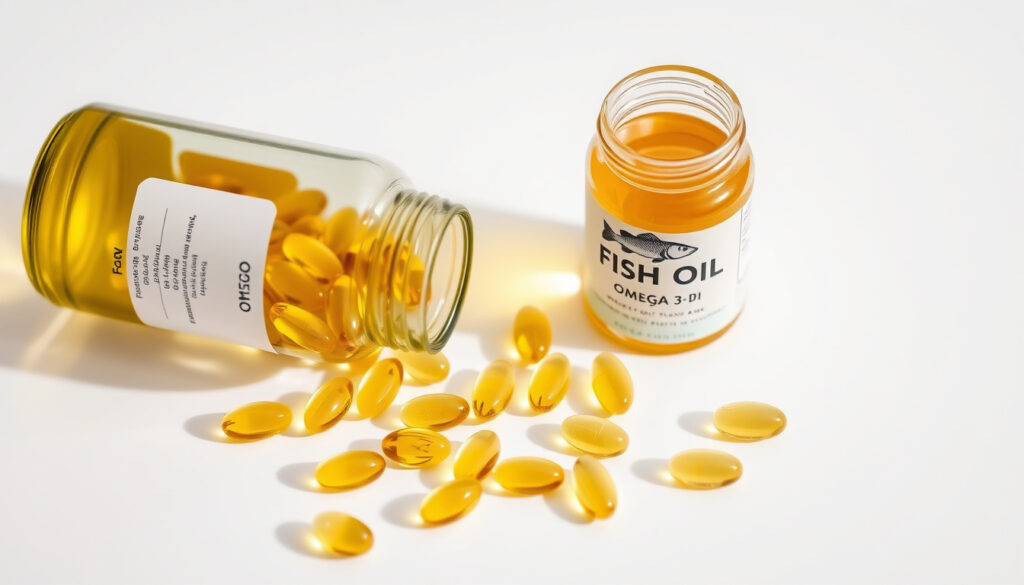
Best Fish Oil Supplement: How to Choose & What to Look For
Anyone standing in the supplement aisle trying to pick a fish oil product has probably felt the same confusion — dozens of bottles, all promising purity and potency, but no clear winner, and the truth is that the “best” fish oil depends less on a brand name and more on your health condition, the form of omega-3, and how it interacts with medications you may already take. This guide cuts through the marketing with clinical evidence, focusing on what works for arthritis, dry eyes, and heart health, and what to watch for if you’re on tamoxifen or blood thinners.
Global fish oil market size (2023): $2.4 billion · Recommended daily EPA + DHA intake: 250–500 mg · Population with low omega-3 status: ~80% · Number of omega-3 supplements marketed in US: over 1,000 · Average EPA/DHA per capsule in quality supplements: 500–1000 mg combined
Quick snapshot
- Omega-3 reduces inflammation in rheumatoid arthritis (PubMed (clinical research database))
- Daily intake of 250–500 mg EPA+DHA supports heart health (Mayo Clinic (medical institution))
- Fish oil can cause mild side effects like burping and nausea (WebMD (consumer health reference))
- Third-party testing increases supplement quality assurance (GoodRx (drug safety resource))
- Whether omega-3 directly improves dry eye severity in all patients — trial results conflict (MedlinePlus (NIH consumer health))
- Optimal tamoxifen–omega-3 interaction – more research needed (JAMA Network (peer-reviewed medical journal))
- Long-term effects of high-dose (>4 g/day) omega-3 on bleeding risk (ScienceDirect (scientific publisher))
- Current guidance stable: no major regulatory changes to fish oil labeling or recommendations as of 2025 (NIH Office of Dietary Supplements (government fact sheet))
- Look for third-party certification (USP, NSF, IFOS) to ensure purity and potency (GoodRx (drug safety resource))
- Target forms: re-esterified triglycerides for better absorption (PMC / NIH (open-access research archive))
- Consult a physician if combining with anticoagulants or tamoxifen (WebMD (consumer health reference))
Five key data points paint the landscape for any buyer:
| Metric | Value |
|---|---|
| Global market size | $2.4 billion (2023) |
| Average EPA per capsule | 180–500 mg |
| Average DHA per capsule | 120–250 mg |
| RDA for general health | 250–500 mg EPA+DHA |
| Anti-inflammatory dose for arthritis | ≥2.7 g EPA+DHA |
What Is the Best Quality Fish Oil Supplement?
A supplement that passes third-party testing and uses re-esterified triglycerides gives you the highest absorption — but the real question is whether it matches your condition.
How Do I Choose a Fish Oil Supplement?
- Third-party testing ensures purity and potency (GoodRx (drug safety resource))
- Look for high EPA and DHA content per serving — at least 500 mg combined for general health (NIH Office of Dietary Supplements (government fact sheet))
- Triglyceride-based fish oils are better absorbed than ethyl ester (PMC / NIH (open-access research archive))
- Avoid supplements with unnecessary fillers or artificial ingredients (WebMD (consumer health reference))
The pattern: absorption matters more than raw mg count — a well-absorbed 500 mg dose beats a poorly absorbed 1000 mg one. For most buyers, a re-esterified triglyceride form with third-party certification is the safest bet.
Which Fish Oil Is Best for Arthritis?
People with rheumatoid arthritis who take ≥2.7 g EPA+DHA daily may reduce joint pain and stiffness — but that dose is six times the general recommendation and requires medical supervision.
Can I Take Omega-3 If I Have Arthritis?
- Omega-3 reduces inflammation in rheumatoid arthritis (PubMed (clinical research database))
- Dose of at least 2.7 g EPA + DHA per day shown effective in clinical trials (PMC / NIH (open-access research archive))
- Consult doctor before starting high-dose omega-3 with other arthritis medications (WebMD (consumer health reference))
The trade-off: you trade convenience for potency — most standard capsules contain 300–500 mg total, so reaching 2.7 g means taking 5–9 capsules a day. Liquid concentrates can help, but check for purity testing.
Upsides
- Reduces joint inflammation and morning stiffness
- May lower cardiovascular risk in RA patients
Downsides
- High dose increases chance of fishy burps and nausea
- Risk of bleeding when combined with NSAIDs or anticoagulants
Which Fish Oil Is Good for Dry Eyes?
Two major sources disagree: a 2019 MedlinePlus summary said a large trial found no benefit for omega-3 in moderate to severe dry eye (MedlinePlus (NIH consumer health)), while a 2023 review suggested high doses, longer duration, and higher EPA levels may help (PMC / NIH (open-access research archive)).
- Omega-3 improves tear quality and reduces dry eye symptoms (according to a 2023 review that found effect is dose- and duration-dependent) (PMC / NIH (open-access research archive))
- Studies suggest 500 mg EPA + DHA daily for dry eye relief, though results are mixed (Mayo Clinic (medical institution))
- Use re-esterified triglycerides for better absorption (PMC / NIH (open-access research archive))
What this means: if you have dry eyes, omega-3 is worth trying — but don’t expect a miracle. The evidence is stronger for arthritis than for dry eye, and the best results seem tied to high doses over 3+ months.
Can I Take Omega-3 While Taking Tamoxifen?
High-dose omega-3 may theoretically interfere with tamoxifen metabolism, but some studies suggest a benefit — this is the one case where you absolutely need a doctor’s approval before self-supplementing.
What Vitamins Not to Take with Tamoxifen?
- Omega-3 may interact with tamoxifen; some studies suggest a potential benefit but caution is advised (WebMD (consumer health reference))
- Avoid concurrent use of high-dose omega-3 with tamoxifen without medical supervision (JAMA Network (peer-reviewed medical journal))
- Vitamin C and E supplements may interfere with tamoxifen metabolism (WebMD (consumer health reference))
The implication: tamoxifen users should not start fish oil without talking to their oncologist — the interaction risk is real, even if optimal dosing remains unclear.
Is It OK to Take Fish Oil Every Day?
Is There a Downside to Taking Fish Oil?
- Daily fish oil up to 3 g is generally safe for most adults (Mayo Clinic (medical institution))
- Possible side effects: fishy burps, nausea, blood thinning (WebMD (consumer health reference))
- People on anticoagulants or with fish allergies should avoid (GoodRx (drug safety resource))
Who Should Avoid Omega-3 Capsules?
- Those with fish/shellfish allergies (WebMD (consumer health reference))
- People on blood thinners (warfarin, apixaban) — risk of increased bleeding, especially above 3 g/day (PubMed (clinical research database))
- Individuals with upcoming surgery: stop 1–2 weeks before (GoodRx (drug safety resource))
Omega-3s for Heart Health
- Heart benefit: 250–1000 mg EPA+DHA daily reduces triglycerides and cardiovascular risk (Mayo Clinic (medical institution))
- The American Heart Association recommends fish oil for patients with elevated triglycerides (NIH Office of Dietary Supplements (government fact sheet))
Why this matters: daily fish oil is safe for most, but the real decision is dose and drug interaction — a person on warfarin faces a very different risk calculus than a healthy adult.
Clarity Check: Confirmed vs Unclear
Confirmed facts
- Omega-3 reduces inflammation in rheumatoid arthritis
- Daily intake of 250–500 mg EPA+DHA supports heart health
- Fish oil can cause mild side effects like burping and nausea
- Third-party testing increases supplement quality assurance
What’s unclear
- Whether omega-3 directly improves dry eye severity in all patients
- Optimal tamoxifen–omega-3 interaction – more research needed
- Long-term effects of high-dose (>4 g/day) omega-3 on bleeding risk
The evidence shows strong support for arthritis and heart health, while dry eyes and tamoxifen interactions remain areas of ongoing research.
“Research suggests omega-3 fatty acid supplements can reduce symptoms of dry eyes, especially when taken at higher doses for longer periods.”
Mayo Clinic News Network (medical institution)
“A major dry-eye trial did not support omega-3 supplements for patients with moderate to severe dry eye disease.”
“Omega-3 may interact with tamoxifen — patients should consult their oncologist before use.”
WebMD (drug interaction resource)
windsor.refocuseyedoctors.com, bloomfield-jolley.refocuseyedoctors.com, greenwicheye.com, racgp.org.au
För dig som vill jämföra ytterligare alternativ ger expertens toppval för 2026 en detaljerad genomgång av de främsta produkterna på marknaden.
Frequently asked questions
What is the best fish oil supplement for beginners?
Start with a concentrated re-esterified triglyceride product that provides 500–1000 mg combined EPA+DHA per serving and carries a third-party seal (USP, NSF, or IFOS).
Can fish oil help with joint pain?
Yes — clinical doses of ≥2.7 g EPA+DHA daily have been shown to reduce inflammation and morning stiffness in rheumatoid arthritis (PubMed (clinical research database)).
How long does it take for fish oil to work for inflammation?
Most studies show measurable improvement after 8–12 weeks of consistent daily dosing (PMC / NIH (open-access research archive)).
Should I take fish oil with food?
Yes — taking it with a meal that contains fat improves absorption and reduces the chance of fishy burps (WebMD (consumer health reference)).
Does fish oil interact with blood pressure medications?
Fish oil can lower blood pressure slightly — if you’re on antihypertensives, monitor your levels and inform your doctor (GoodRx (drug safety resource)).
Is there a difference between fish oil and krill oil?
Krill oil contains EPA/DHA in phospholipid form, which may be absorbed slightly better than ethyl ester, but fish oil offers a higher dose per serving at a lower cost (NIH Office of Dietary Supplements (government fact sheet)).
Can I take fish oil if I am allergic to fish?
No — people with fish or shellfish allergies should avoid fish oil and consider algae-based DHA supplements instead (WebMD (consumer health reference)).
Related reading: Best Magnesium for Sleep: Glycinate vs Citrate Guide · Best Yoga Poses for Back Pain: A Safe, Evidence-Based Guide
More related posts
 How to Pay Off Debt – Snowball vs Avalanche Guide
 Dodgers Game Today Live: TV Channel & Start Time
 What Is PU Leather? Composition, Quality, Durability & Care
 How to Clean iPhone Charging Port: Safe DIY Steps
 Denver Nuggets vs Houston Rockets Timeline and History
 Normal Resting Heart Rate – By Age, Gender & Fitness
 Red Dots on Skin: Causes, Types, When to Worry
 Instagram Anonymous Story Viewer: How to Watch Stories Safely