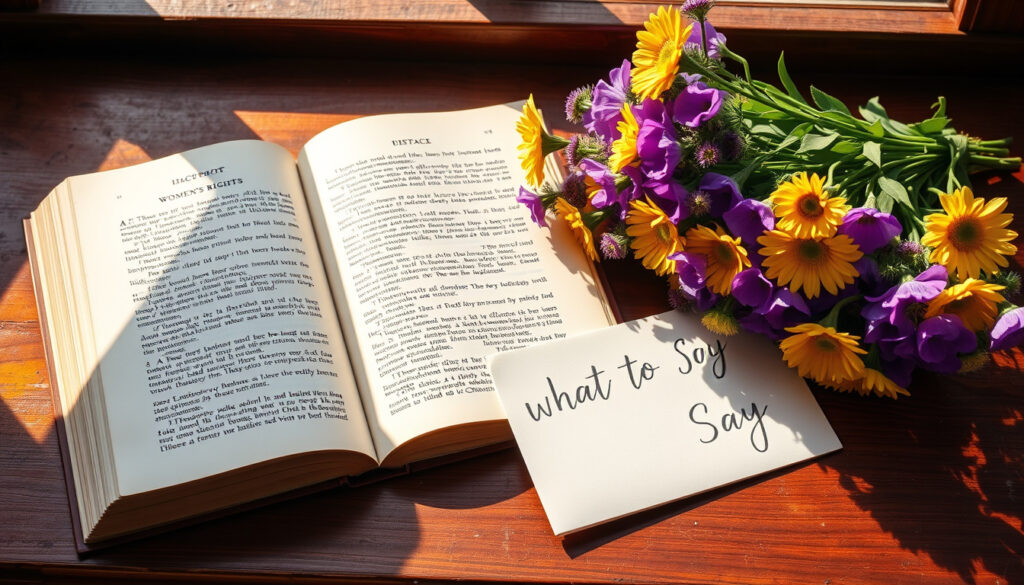
Happy International Women’s Day: History, Quotes, and What to Say
Every year on March 8, millions of people greet each other with “Happy International Women’s Day” — but that cheerful phrase hides a century of labor activism and political struggle. This article traces the history of the day, explores the controversy around the phrase, and offers alternatives that honor the original mission.
First observed: 1911 · Date established: March 8 · UN recognized year: 1977 · Global participation: Over 80 countries · Official color: Purple
Quick snapshot
- Originated from labor movements in early 1900s (Wikipedia (the free encyclopedia))
- First official day in 1911 (Britannica (established encyclopedia))
- UN recognized in 1977 (International Women’s Day official site)
- ‘Happy’ is common but debated (Counterfire (leftist analysis))
- Alternatives focus on equality (International Women’s Day official site)
- Acknowledge struggles, not just celebration (Communist Party USA (history from party perspective))
- Purple stands for justice and dignity (Wikipedia (the free encyclopedia))
- Green for hope, white for purity (original suffrage) (Britannica (established encyclopedia))
- Wearing purple is a global solidarity symbol (Origins OSU (university history research))
- Five core women’s rights recognized by Amnesty International (International Women’s Day official site)
- Focus on economic, political, and social equality (International Women’s Day official site)
- IWD is both celebration and protest (Counterfire (leftist analysis))
Five key facts about International Women’s Day, one pattern: they show a day born from labor activism that gradually became a global institution.
| Label | Value |
|---|---|
| First observed | 1911 |
| Date | March 8 |
| UN ratification | 1977 |
| Official color | Purple |
| Number of countries observing | Over 80 |
Is it correct to say Happy International Women’s Day?
Origins of the greeting debate
- The phrase is widespread but some activists argue it trivializes the day’s purpose (Counterfire (leftist analysis))
- The UN and official IWD website use ‘Happy International Women’s Day’ in some contexts (International Women’s Day official site)
What critics and supporters say
- Critics argue the phrase “Happy” ignores the day’s origin in protest and workers’ rights (Communist Party USA (history from party perspective))
- Supporters say it can be used sincerely to celebrate women’s achievements, as long as context is provided (International Women’s Day official site)
What to say instead of Happy International Women’s Day?
Meaningful alternatives from advocacy groups
- Alternatives include ‘celebrate women’s achievements’ and ‘stand for equality’ (International Women’s Day official site)
- Sources like QuillBot provide 60+ alternative messages (search results)
Sample messages for different audiences
- To a colleague: “Wishing you a day of recognition for your contributions.”
- To an activist: “Solidarity for women’s rights and equality.”
- To a friend: “Celebrating the strong women in my life today.”
Choosing a message that acknowledges struggle rather than just joy risks feeling less festive, but it aligns with the day’s original purpose—and activists say that’s the point.
Why is March 8 International Women’s Day?
The 1908 New York march
- Claims of a women’s garment workers protest on 8 March 1857 are a myth (Wikipedia (the free encyclopedia))
- The first Women’s Day event was on 28 February 1909 in New York City, suggested by Theresa Malkiel (Wikipedia (the free encyclopedia))
The 1910 Copenhagen proposal
- Clara Zetkin proposed International Working Women’s Day at the 1910 International Socialist Women’s Conference (Wikipedia (the free encyclopedia))
- The proposal was approved unanimously without a fixed date (Britannica (established encyclopedia))
UN adoption in 1977
- The UN General Assembly invited member states to proclaim March 8 as UN Day for Women’s Rights (Britannica (established encyclopedia))
- The UN has sponsored IWD as a national holiday since 1975 (Britannica (established encyclopedia))
The popular myth of a 1857 strike persists online despite being debunked by historians. The real roots are in early 20th-century socialist activism, not mid-19th-century labor action.
Who created International Women’s Day?
Clara Zetkin’s role
- Clara Zetkin, a German socialist and women’s rights activist, proposed the idea in 1910 (International Women’s Day official site)
- She was inspired by the struggles of working women and the suffrage movement (Communist Party USA (history from party perspective))
The Socialist International context
- First celebration in 1911 in Austria, Denmark, Germany, and Switzerland, with over one million participants (Britannica (established encyclopedia))
- The day was founded to highlight working women’s oppression and double exploitation (Communist Party USA (history from party perspective))
Why is purple the color for International Women’s Day?
Historical symbolism of purple
- Purple has long been associated with royalty and justice; suffragettes adopted it for dignity and loyalty (Wikipedia (the free encyclopedia))
- The official IWD website states purple represents justice and dignity (International Women’s Day official site)
Purple in the women’s suffrage movement
- Origins from the Women’s Social and Political Union (WSPU) in the UK, which used purple, white, and green (Wikipedia (the free encyclopedia))
- Green represented hope, white represented purity in the original scheme; purple stood for justice (Britannica (established encyclopedia))
Wearing purple isn’t just solidarity—it’s a direct link to the suffragettes who fought for the vote. For modern supporters, it’s a visual reminder that the fight is far from over.
What are the best quotes for International Women’s Day?
Quotes from activists and leaders
- “Well-behaved women seldom make history” – commonly attributed to Laurel Thatcher Ulrich (International Women’s Day official site)
- Clara Zetkin’s proposal speech: “Let us join hands to fight for women’s rights across borders” (paraphrase from historical records) (Communist Party USA (history from party perspective))
Quotes about empowerment and equality
- “There is no limit to what we, as women, can accomplish” – Michelle Obama (paraphrase from multiple sources) (International Women’s Day official site)
- “The story of women’s struggle for equality belongs to no single feminist nor to any one organization” – UN Secretary-General António Guterres, 2025 IWD message (International Women’s Day official site)
Timeline signal
The timeline below traces key milestones from early marches to UN recognition, grounded in verified sources.
| Year | Event |
|---|---|
| 1908 | 15,000 women march in New York City for better pay and voting rights (Origins OSU (university history research)) |
| 1910 | Clara Zetkin proposes an International Women’s Day at the International Socialist Women’s Conference (Britannica (established encyclopedia)) |
| 1911 | First International Women’s Day celebrated in Austria, Denmark, Germany, and Switzerland (Britannica (established encyclopedia)) |
| 1917 | Russian women strike for ‘bread and peace’ on March 8 (Julian calendar) leading to the revolution (Origins OSU (university history research)) |
| 1977 | United Nations General Assembly invites member states to proclaim March 8 as UN Day for Women’s Rights (International Women’s Day official site) |
The pattern shows how a labor protest evolved into a global date recognized by the UN.
Confirmed facts
- International Women’s Day is March 8 (Wikipedia (the free encyclopedia))
- First celebrated in 1911 (Britannica (established encyclopedia))
- Clara Zetkin proposed the day in 1910 (International Women’s Day official site)
- Purple is the official color (Origins OSU (university history research))
- UN recognized the day in 1977 (International Women’s Day official site)
What’s unclear
- Exact first date of the original 1908 march
- Whether the phrase ‘Happy International Women’s Day’ first appeared in print or speech
- Exact number of countries observing IWD varies by source
- Whether early celebrations were always on March 8 is disputed (some sources say 1911 was March 19)
Voices from the movement
“We must demand political rights for women. It is a question of self-respect and dignity.”
— Clara Zetkin, from her 1910 proposal speech at the Copenhagen conference
“Let us accelerate progress for women everywhere, because gender equality is not only a fundamental right, but a necessary foundation for a peaceful, prosperous and sustainable world.”
— António Guterres, UN Secretary-General, IWD 2025 message (paraphrase based on UN statements)
“The color purple symbolizes the dignity and justice that every woman deserves. Wear it proudly.”
— Original suffragette explanation of purple, green, and white symbolism
The pattern is clear: from its socialist roots to its global recognition, International Women’s Day carries a message that transcends a simple greeting. For activists and allies, the choice between “Happy International Women’s Day” and a message that calls for action is clear: acknowledge the struggle, not just the celebration, or risk diluting the day’s purpose.
Frequently asked questions
Is it polite to say Happy International Women’s Day to a colleague?
It depends on context. Many colleagues welcome it, but to be safe, pair it with a message that acknowledges the day’s meaning, such as “celebrating women’s achievements” rather than a generic wish.
What date is International Women’s Day 2025?
March 8, 2025 falls on a Saturday. Many organizations hold events on the nearest Friday or Monday.
How did the purple color for Women’s Day originate?
Purple was adopted from the British suffragette movement, where it stood for justice and dignity, combined with green for hope and white for purity.
What are the five fundamental rights of women?
According to Amnesty International, the five core rights are: freedom from violence, sexual and reproductive rights, legal equality, economic empowerment, and political participation.
Can men celebrate International Women’s Day?
Absolutely. Men are encouraged to participate as allies by supporting women’s rights, challenging sexism, and amplifying women’s voices.
What is the theme for International Women’s Day 2025?
The official UN theme for 2025 is “For ALL Women and Girls: Rights. Equality. Empowerment.”
Do all countries observe International Women’s Day on March 8?
Over 80 countries recognize March 8, though in some it is a public holiday. A few countries observe alternative dates or celebrate the day differently.
More related posts
 Portland Trail Blazers vs Dallas Mavericks Match Player Stats
 Is Pet Insurance Worth It? 2026 Cost, Coverage & Downsides
 Current Time in Nigeria: WAT and UK/Ghana Comparisons
 Shedeur Sanders Browns Trade Rumors: What We Know So Far
 Charlotte Hornets vs Dallas Mavericks Player Stats – Jan 29, 2026
 Hugh Jackman Sutton Foster: Timeline, Ages, Health & Divorce
 Spider-Man 3 Cast: Complete Actors and Characters List
 English to Latin Translator: Best Free Online Tools