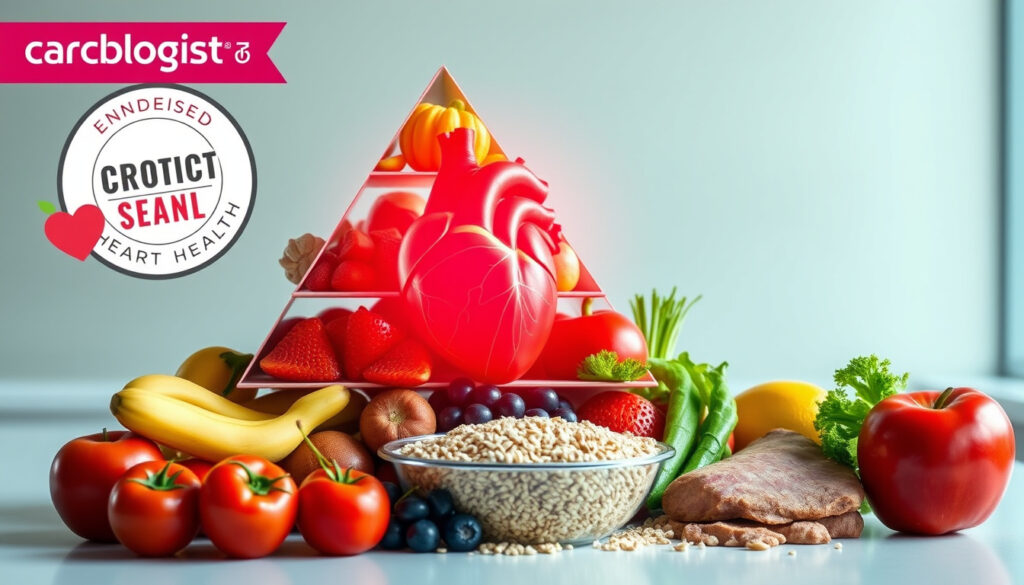
New Food Pyramid 2026: Cardiologists Weigh In on Heart Health
Few things spark more debate than what we should put on our plates. The new food pyramid 2026, released on January 7, 2026, by HHS, replaces MyPlate with a five-shelf pyramid that emphasizes protein and healthy fats while cutting added sugars, and as cardiologists weigh in with both support and serious caveats, understanding what changed can help you decide how to eat for heart health this year.
Release date: January 7, 2026 ·
Issuing body: U.S. Department of Health and Human Services (HHS) ·
Key change: Prioritization of high-quality protein, healthy fats, and whole grains ·
Food groups: 5 (vegetables, fruits, grains, proteins, healthy fats)
Quick snapshot
- Guidelines released January 7, 2026 by HHS (NPR News)
- Emphasis on high-quality protein, healthy fats, fruits, vegetables, and whole grains (NPR News) (NPR News)
- Pyramid with 5 shelves replaces MyPlate (CNN Health)
- Role of alcohol in the pyramid remains ambiguous (CNN Health)
- 2025: Chronic disease burden prompts guideline review
- January 7, 2026: HHS releases new pyramid
- January 2026: Cardiologist commentary and debates emerge
- Implementation by schools, hospitals, and federal food programs
- Ongoing expert debate on protein ratios and ultra-processed foods
The five-shelf pyramid groups foods into vegetables, fruits, whole grains, high-quality proteins, and healthy fats — a notable departure from MyPlate’s four-section plate. Here’s a closer look at the official facts:
| Attribute | Value |
|---|---|
| Release date | January 7, 2026 |
| Issuing agency | U.S. Department of Health and Human Services (HHS) |
| Visual format | Food pyramid with 5 shelves |
| Key food groups | Vegetables, fruits, whole grains, high-quality proteins, healthy fats |
| Foods to limit | Ultra-processed foods, added sugars, refined grains, sodium |
What are the new dietary guidelines in 2026?
Key changes in the 2026 food pyramid
- The guidelines prioritize high-quality protein and healthy fats alongside fruits, vegetables, and whole grains (NPR News).
- Saturated fat is still capped at 10% of daily calories (CNN Health).
- Added sugars and refined grains are restricted; the guidance advises two to four servings of whole grains, three servings of vegetables, and two servings of fruits per day (CNN Health).
Official release and source
Health Secretary Robert F. Kennedy Jr. introduced the new recommendations at a January 2026 briefing (NPR News). The accompanying press release from HHS described the update as a “reset” of federal nutrition policy.
The shift from MyPlate to a pyramid puts protein and healthy fats front and center — a change that aligns with current metabolic science but also opens the door to higher red meat consumption.
The implication: the new graphic may simplify healthy eating for some while inadvertently encouraging less heart-healthy choices for others.
Is there actually a new food pyramid?
What the 2026 food pyramid looks like
The pyramid visually groups foods into five shelves, with animal-source proteins and healthy fats placed prominently at the top (CNN Health). Critics, including the American College of Cardiology, said the graphic can be misread as an inverted pyramid with steak, whole milk, cheese, and fruits together at the apex (American College of Cardiology).
How it differs from the 1992 and 2005 versions
STAT News reported that the new federal graphic effectively turns the carbohydrate-heavy 1992 food pyramid upside down (STAT News). The 2005 pyramid was more abstract; the 2026 version is concrete and shelf-based, resembling a grocery store layout.
A simpler visual may help consumers make faster choices — but placing red meat and cheese at the top risks normalizing high-saturated-fat choices that cardiologists urge patients to limit.
The catch: while the pyramid aims to reduce confusion, its design may inadvertently steer consumers toward the very foods cardiologists advise against.
What is Trump’s new food pyramid?
The Trump administration’s role in the 2026 dietary guidelines
The Trump administration announced a “reset” of federal nutrition policy via the HHS press release that accompanied the January 7 rollout (NPR News). The guidelines call for avoiding highly processed foods, added sugars, and refined grains, and they emphasize protein quality and healthy fats.
Fact sheet from HHS
According to HHS, the new pyramid is designed to reflect current science on dietary patterns and chronic disease prevention. The American Heart Association welcomed parts of the update but warned that red meat and salt recommendations could lead consumers to exceed sodium and saturated-fat limits (American Heart Association).
What do cardiologists think of the new food pyramid?
Cardiologist-approved foods in the new pyramid
- Cardiologists broadly endorse the emphasis on fruits, vegetables, and healthy fats (CNN Health).
- The AHA’s March 2026 cardiovascular nutrition guidance stresses vegetables, fruits, whole grains, unsaturated fats, and limited added sugars (AHA Professional Heart Daily).
Foods cardiologists often limit or avoid
Cardiologists from Nebraska Medicine and Baptist Health have pointed out that the pyramid’s prominent placement of red meat and whole-fat dairy may encourage overconsumption (KSAT San Antonio). A cardiologist quoted by CNBC listed nine American foods they avoid, including breakfast cereals and processed cheese (CNN Health).
Upsides
- Strong emphasis on fruits, vegetables, and whole grains.
- Clear limit on added sugars and refined carbs.
- Recognition of healthy fats (avocados, nuts, seeds).
Downsides
- Pyramid graphic may overpromote red meat and cheese.
- No explicit cap on sodium beyond general guidance.
- Animal-protein placement contradicts plant-forward recommendations from major cardiology groups.
The pattern: cardiologists broadly support the new plant emphasis but warn that the pyramid’s visual mix may lead to higher saturated fat intake.
Why are experts divided over the new federal dietary guidelines?
Points of agreement among nutrition experts
Experts agree on the need to reduce added sugars and refined carbs, according to multiple sources (NPR News). The AHA and ACC both endorse a dietary pattern rich in vegetables, fruits, and whole grains (AHA Professional Heart Daily; American College of Cardiology).
Sources of debate: protein, fat, and ultra-processed foods
Debate centers on the proportion of plant vs. animal protein. A Stanford nutrition expert, Christopher Gardner, criticized the pyramid’s prioritization of red meat and saturated-fat sources as conflicting with decades of evidence (NPR News). Some argue the guidelines are influenced by industry lobbying (STAT News).
The same pyramid that helps consumers avoid processed carbs may also steer them toward saturated fat — exactly what cardiologists warn against.
The implication: the debate is not just about nutrients but about who shapes the message and how consumers interpret it.
Timeline of the new food pyramid 2026
Key events leading up to and following the release:
- 2025: Chronic disease burden and obesity rates prompt review of federal dietary guidelines.
- January 7, 2026: HHS releases new dietary guidelines and food pyramid under Trump administration (NPR News).
- January 2026: Cardiologists and nutrition experts publish commentary and debate (CNN Health; American College of Cardiology).
- Ongoing: Implementation by schools, hospitals, and federal food programs.
What this means: the timeline shows a rapid shift from policy release to expert reaction, indicating the controversy will continue as the guidelines are implemented.
Confirmed and unconfirmed aspects
Confirmed facts
- New dietary guidelines released January 7, 2026 (NPR News).
- Guidelines prioritize protein, healthy fats, fruits, vegetables, whole grains (NPR News).
- Visual format is a five-shelf pyramid (CNN Health).
- Cardiologists broadly endorse plant emphasis (AHA Professional Heart Daily).
- Expert division exists on protein ratios and industry influence (STAT News).
What’s unclear
- Exact long-term health impact compared with MyPlate (not yet studied).
- Whether guidelines will be adopted internationally.
- Role of alcohol in the pyramid not clearly defined in all sources (CNN Health).
- The effect on chronic disease rates is not yet measured.
- The guidelines’ impact on food industry practices is unclear.
What experts say — quotes from the front lines
“The new guidance continues to limit saturated fat to no more than 10% of daily calories — that’s important, but the visual placement of red meat and cheese at the top of the pyramid sends a mixed message.”
— Cardiologist, Nebraska Medicine (via KSAT San Antonio)
“The pyramid is essentially the 1992 version turned upside down — carbs at the bottom, fat at the top. That’s a big shift, but it risks confusing consumers about what a heart-healthy plate really looks like.”
— Christopher Gardner, Stanford nutrition researcher (via NPR News)
“I tell my patients to avoid nine American foods: breakfast cereals, processed cheese, sugary drinks, white bread, stick margarine, high-sugar yogurt, processed meats, non-dairy creamers, and frozen pizzas. The new pyramid doesn’t go far enough on several of these.”
— Cardiologist quoted by CNBC (via CNN Health)
“We welcome the emphasis on whole foods and healthy fats. But the animal-protein placement in the graphic, combined with weak sodium guidance, could undermine the very outcomes we’re trying to improve.”
— American Heart Association statement (AHA)
The pattern across all four viewpoints: cardiologists support the shift away from processed foods and refined carbs, but worry the pyramid’s visual messaging and insufficient sodium limits may increase saturated fat intake — especially for patients already at risk.
healthmanagement.org, nypost.com, pubmed.ncbi.nlm.nih.gov, pmc.ncbi.nlm.nih.gov
Frequently asked questions
What is the main purpose of the new food pyramid 2026?
The new pyramid is designed to help Americans build healthier dietary patterns by visually grouping foods into five shelves and emphasizing high-quality protein, healthy fats, and whole grains while limiting added sugars and ultra-processed foods (NPR News).
How does the 2026 food pyramid compare to MyPlate?
MyPlate used a four-section plate diagram; the new pyramid uses a five-shelf structure. It also shifts emphasis from carbohydrates to protein and healthy fats (CNN Health).
Is the new food pyramid 2026 for everyone?
The guidelines are designed for Americans aged 2 and older. Individual needs (e.g., medical conditions, allergies) require personalized advice from a healthcare provider.
Does the new food pyramid recommend limiting alcohol?
The pyramid itself does not explicitly address alcohol, but the accompanying HHS guidance maintains existing moderate-drinking limits (up to one drink per day for women, two for men) (CNN Health).
Where can I download a printable new food pyramid 2026 PDF?
HHS has not yet released an official PDF. The graphic is available in news articles from NPR News and CNN Health.
Are there any costs associated with following the 2026 dietary guidelines?
No — the guidelines are a free federal publication. Following them may mean spending more on whole foods and less on ultra-processed products, which can save money over time.
How often are federal dietary guidelines updated?
Every five years. The next update is expected in 2030–2031.
For Americans concerned about heart health, the choice is clear: use the new pyramid as a starting point — fill half your plate with vegetables and fruits, choose lean protein sources, and keep saturated fat below 10% of daily calories — or risk following a graphic that even its supporters say needs a cardiologist’s second look.
More related posts
 Chamberlain Garage Door Opener – Programming and Troubleshooting Guide
 C8 Corvette for Sale: Price, Specs & Buying Guide
 S&P 500 News: Records Amid Ceasefire & Earnings Boost
 Josh Allen Hailee Steinfeld – Relationship Timeline to Wedding
 Is Pet Insurance Worth It? 2026 Cost, Coverage & Downsides
 Townhomes for Sale Near Me: Pros, Cons & Costs
 Best Books of All Time – Consensus from Critics and Readers
 How to Dry Flowers: 4 Methods, Mistakes, and Best Blooms