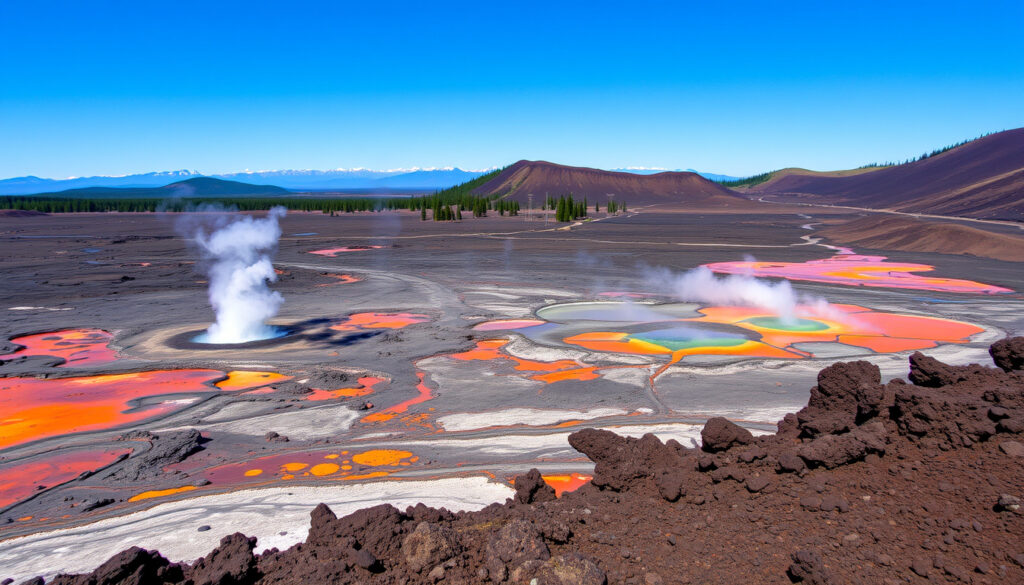
Lassen Volcanic National Park: Yellowstone Without Crowds
There’s a place in Northern California where you can stand beside a steaming fumarole, hike to the rim of a cinder cone, and camp under a sky so dark the Milky Way looks painted on — all without fighting crowds. Lassen Volcanic National Park packs the geothermal drama of Yellowstone into a fraction of the space and a fraction of the visitor count.
Established: 1916 ·
Area: 106,589 acres (431 km²) ·
Highest point: Lassen Peak, 10,457 ft (3,187 m) ·
Number of volcanic features: 4 types of volcanoes (shield, cinder cone, plug dome, composite) ·
Annual visitors: ~500,000 (2023) ·
Grizzly bear population: 0 (black bears only)
Quick snapshot
- Lassen Peak last erupted in 1917 (National Park Service)
- No grizzly bears inhabit the park; only black bears are present (NPS wilderness guidelines)
- Highway 89 through the park closes in winter (NPS plan-your-visit page)
- Exact road reopening date after winter snowmelt varies year to year (NPS seasonal conditions)
- Long-term volcanic activity predictions remain uncertain; USGS monitors continuously (USGS Lassen Volcanic Center)
- 1914–1917: Lassen Peak erupts, creating the Devastated Area (NPS history page)
- 1916: Park established by President Woodrow Wilson (NPS history page)
- 1972: Designated a UNESCO International Biosphere Reserve (NPS biosphere reserve page)
- Summer 2025: Full road and facility operations expected June–September (NPS current conditions)
- Wilderness permits now online-only via Recreation.gov (NPS wilderness permit page)
| Attribute | Value |
|---|---|
| Date Established | August 9, 1916 |
| Total Area | 106,589 acres (431 km²) |
| Highest Elevation | Lassen Peak, 10,457 ft (3,187 m) |
| Volcanic Types | Shield, cinder cone, plug dome, composite |
| Annual Visitors (2023) | 477,000 (National Park Service) |
| Entrance Fee | $30 per vehicle (valid 7 days) |
What makes Lassen Volcanic National Park special?
What are the four types of volcanoes found in the park?
- Shield volcano (e.g., Prospect Peak)
- Cinder cone (e.g., Cinder Cone itself)
- Plug dome (e.g., Lassen Peak)
- Composite volcano (e.g., Brokeoff Volcano)
Lassen is one of the few places on Earth where all four major types of volcanoes exist within a single protected area, according to the National Park Service volcanoes page. That geological diversity means you can hike across a cinder cone one morning and stand on a plug dome the next.
What geothermal features can I see?
- Boiling pools and mud pots at Sulphur Works
- Bumpass Hell Trail (boardwalk through hydrothermal area)
- Steaming fumaroles near Lassen Peak
The park has boiling pools, fumaroles, mud pots, and steaming ground — the same hydrothermal menu as Yellowstone, just on a more intimate scale. The NPS plan-your-visit page notes that most visitors drive Highway 89 through the western half of the park, where the most accessible geothermal sites are located.
What is the history of Lassen Peak’s eruption?
Lassen Peak erupted between 1914 and 1917, creating the Devastated Area — a landscape of volcanic rock and ash visible from the park highway. The NPS history page documents that the eruption sent ash across the region and remains the most recent volcanic activity in the Cascade Range south of Mount St. Helens.
For a first-time visitor, the geothermal diversity is the headline. You can see all four volcano types and active hydrothermal features in a single day — something that requires multiple days and longer drives in Yellowstone.
What is the best time to visit Lassen Volcanic National Park?
What is the weather like in each season?
- Summer (June–September): Warm days, cool nights, all facilities open
- Winter (November–April): Heavy snow, limited access, snowshoeing and skiing
- Spring and fall: Unpredictable with partial closures
Summer (June–September) is the only time all roads, trails, and facilities are open, per the NPS current conditions page. Winter (November–April) brings heavy snow, limited access, and snowshoeing or skiing opportunities. Spring and fall can be unpredictable with partial closures.
When are the roads open?
Highway 89 (Lassen Volcanic National Park Highway) is closed in winter, typically from November through May or June depending on snowpack. The NPS current conditions page updates road status regularly during spring melt.
What are the peak visitor months?
July and August see the highest visitation, though even then Lassen draws far fewer people than Yosemite or Yellowstone. The park recorded 477,000 visitors in 2023 (National Park Service), compared to Yellowstone’s 4.5 million.
Summer offers full access but also crowds (by Lassen standards). Winter offers solitude but requires snow gear and tolerance for road closures. The sweet spot for most visitors is late June or September, when roads are open but schools are in session.
What is the closest city to Lassen National Park and where should I stay?
What is the closest town with services?
The closest city is Redding, California, about 50 miles southwest of the park entrance. The NPS plan-your-visit page lists Redding as the primary gateway for supplies, lodging, and dining. Smaller towns closer to the park include Chester (southeast entrance), Mineral (southwest entrance), and the Burney Falls area (east).
Are there lodging options inside the park?
- Drakesbad Guest Ranch (historic lodge, reservations required)
- Manzanita Lake Campground (first-come, first-served + reservations)
- Backcountry camping (permit required via Recreation.gov)
Inside the park, Drakesbad Guest Ranch and Manzanita Lake Campground offer lodging. Camping in developed campgrounds requires reservations through Recreation.gov Lassen gateway, and backpacking requires a wilderness permit also through Recreation.gov.
What are nearby cabin or hotel recommendations?
Nearby towns like Chester, Mineral, and the Burney Falls area offer cabins, motels, and vacation rentals. The NPS lodging page provides a list of approved options outside the park boundaries.
Is Lassen Volcanic similar to Yellowstone?
What are the main differences between Lassen and Yellowstone?
Yellowstone is larger and has more geysers (including Old Faithful). Lassen has many of the same hydrothermal features but on a smaller scale and with far fewer visitors. Lassen is often called “California’s Yellowstone” for its similar volcanic landscape, but the comparison only goes so far.
Four differences, one pattern: Lassen is Yellowstone compressed into a day trip.
| Feature | Lassen Volcanic National Park | Yellowstone National Park |
|---|---|---|
| Size | 106,589 acres | 2.2 million acres |
| Annual visitors (2023) | 477,000 | 4.5 million |
| Geothermal features | Fumaroles, mud pots, boiling springs | 500+ geysers, hot springs, mud pots |
| Road access | Highway 89 (30-mile scenic drive) | Grand Loop Road (142-mile figure-eight) |
| Winter access | Limited (snowshoe/ski only) | Limited (snowmobile/snowcoach tours) |
| Best for | Day hikers, families, geology enthusiasts | Multi-day road trippers, wildlife watchers |
Which park has more geothermal activity?
Yellowstone has more geysers and a larger hydrothermal system. But Lassen’s features are more concentrated and accessible — you can walk from your car to boiling mud pots at Sulphur Works in under five minutes. The USGS Lassen Volcanic Center notes that the park’s hydrothermal system is still active and monitored continuously.
Which park is less crowded?
Lassen, by a wide margin. With 477,000 annual visitors versus Yellowstone’s 4.5 million, you’ll find empty trails and quiet campgrounds even in peak season. The National Park Service reports that Lassen’s visitor numbers have grown modestly but remain a fraction of the major parks.
Lassen’s smaller size means fewer services and less wildlife diversity. If you want to see bison, wolves, and grizzly bears, Yellowstone is the choice. If you want geothermal features without the traffic jams, Lassen wins.
How many days do you need in Lassen Volcanic and how do I plan a visit?
What are the must-see hikes and sights?
- Lassen Peak Trail (5 miles, strenuous) — summit the volcano
- Manzanita Lake Loop (1.7 miles, easy) — family-friendly lakeside walk
- Cinder Cone Trail (4 miles, moderate) — hike to the rim of a volcanic cone
- Bumpass Hell Trail (3 miles, moderate) — boardwalk through hydrothermal area
Two to three days is enough to see the main attractions, according to the NPS plan-your-visit page. The Lassen Peak Trail, Sulphur Works, and Manzanita Lake are top stops for first-time visitors.
What camping reservations are required?
Camping in developed campgrounds requires reservations through Recreation.gov Lassen gateway, especially in summer. Backpacking requires a wilderness permit, also through Recreation.gov, and permits can be reserved up to 90 days before the start date. The NPS wilderness permit page notes that permits are no longer available in person and the park does not mail permits.
How do I get around the park?
Most visitors drive Highway 89 through the western half of the park. Cell service is limited, so download maps and information before you arrive. The National Park Service offers a digital visitor guide called Peak Experiences that can be downloaded in advance.
alainaswanderingtribe.com, stbernardlodge.com, stbernardlodge.com, northerncaliforniahikingtrails.com, noahlangphotography.com, reddit.com, cassiescompass.com, reddit.com
For those curious about the original geothermal wonderland, a detailed Yellowstone National Park guide offers practical tips and pricing for planning a visit.
Frequently asked questions
Can you drive through Lassen Volcanic National Park?
Yes. Highway 89 runs 30 miles through the western half of the park, connecting the southwest and northwest entrances. The road is typically open from June through October.
Are pets allowed in the park?
Pets are allowed on paved roads, in campgrounds, and in picnic areas, but not on trails or in the backcountry. Service animals are exempt.
Is there a shuttle service inside Lassen?
No. There is no shuttle service. All transportation within the park is by personal vehicle.
Do I need a reservation to enter the park?
No reservation is required for day entry. Camping and wilderness permits require reservations through Recreation.gov.
What is the closest airport to Lassen Volcanic National Park?
Redding Municipal Airport (RDD) is the closest commercial airport, about 50 miles southwest of the park. Sacramento International Airport (SMF) is about 180 miles south.
Are there any waterfalls in the park?
Yes. Kings Creek Falls and Mill Creek Falls are two notable waterfalls within the park, both accessible via moderate hikes.
How long is the Lassen Peak hike?
The Lassen Peak Trail is 5 miles round trip with 2,000 feet of elevation gain. It’s considered strenuous and typically takes 4–6 hours.
For anyone planning a California national parks trip, Lassen offers a volcanic experience that rivals Yellowstone in geological interest but demands far less time and patience with crowds. The choice is clear: if you want geothermal features without the traffic jams, Lassen is the smarter play. If you need the full spectrum of wildlife and geysers, Yellowstone remains the benchmark.
More related posts
 How Many Sq Ft in an Acre? Dimensions & Conversions
 South Park Season 27 Ep 2: Delay, Charlie Kirk, Where to Watch
 Good Fortune (2025): Hit or Flop? Where to Watch & Reviews
 Instant Pot Chicken Recipes: Best Cooking Times & Tips
 S&P 500 News: Records Amid Ceasefire & Earnings Boost
 Carl’s Jr Near Me: Find Locations, Hours, Menu & Prices
 Ups Jobs Near Me – Pay, Requirements And How To Apply
 Allstate Homeowners Insurance: Coverage, Cost & Claims Review