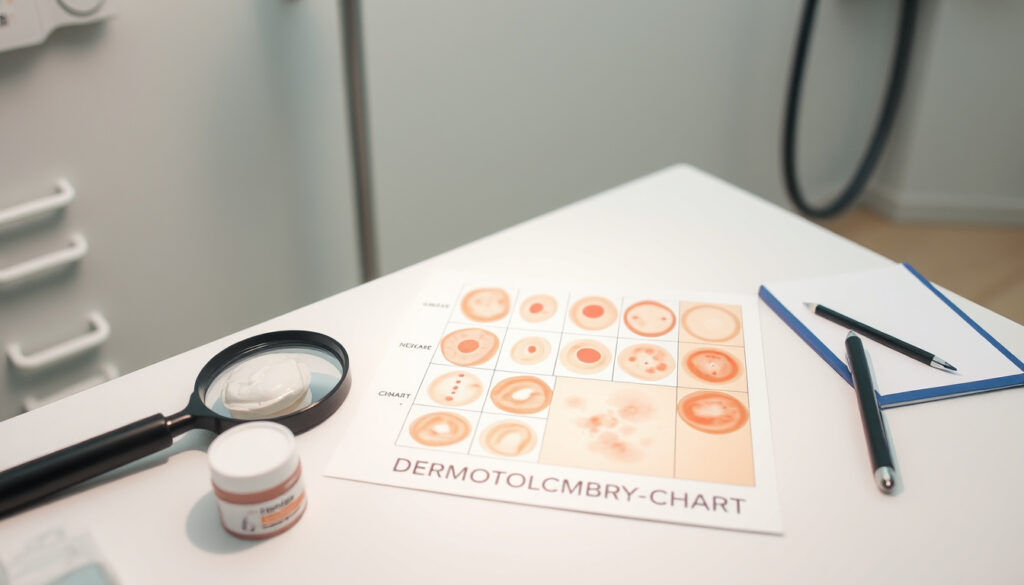
Red Dots on Skin: Causes, Types, When to Worry
You glance down and notice a scattering of tiny red dots on your forearm. They’re painless, not itchy, but they weren’t there yesterday. While it’s natural to worry, the vast majority of red dots on skin are harmless—cherry angiomas, for instance, affect nearly half of adults over 30, according to the Cleveland Clinic. Knowing the difference between the common types can help you decide when to relax and when to see a doctor.
Petechiae appearance: Flat, pinpoint spots from capillary bleeding (Ubie Health) ·
Cherry angiomas: Small, raised, benign, common after 30 (Cleveland Clinic) ·
Leukemia petechiae: Clusters of flat, non‑blanching red/purple spots (Moffitt Cancer Center) ·
Urgent warning: Spreading spots with fever or confusion need immediate care (Banner Health)
Quick snapshot
- Petechiae are flat, pinpoint (1–2 mm) red/purple spots from broken capillaries (Ubie Health)
- Cherry angiomas are raised, bright red, dome‑shaped and benign (Cleveland Clinic)
- Leukemia petechiae are caused by low platelet counts and do not blanch (Moffitt Cancer Center)
- Why some individuals develop more cherry angiomas than others (Cleveland Clinic)
- Whether stress alone directly causes petechiae (often co‑occurs with other factors) (Cleveland Clinic)
- Petechiae can appear suddenly after coughing, vomiting, or straining (Ubie Health)
- Cherry angiomas develop gradually and increase with age (Cleveland Clinic)
- See a doctor if spots spread quickly, accompany fever, or appear after a new medication (Banner Health)
- Harmless spots (cherry angiomas, stress hives) can be left alone (Banner Health)
Five key comparisons that separate the common red dot types:
| Feature | Petechiae | Cherry Angioma | Leukemia Petechiae |
|---|---|---|---|
| Appearance | Flat, pinpoint, red/purple/brown (Ubie Health) | Raised, dome‑shaped, bright red (Cleveland Clinic) | Flat petechiae in clusters, red/purple (Moffitt Cancer Center) |
| Size | 1–2 mm | 1–5 mm | Pinpoint, clusters |
| Elevation | Flat (Ayana Dermatology) | Slightly raised (Ayana Dermatology) | Flat (Moffitt Cancer Center) |
| Blanching | Does not blanch (Ayana Dermatology) | May blanch (Ayana Dermatology) | Does not blanch (Moffitt Cancer Center) |
| Itching | Usually none (may be from underlying cause) | None | None |
| Common cause | Capillary break, strain, infection (Ubie Health) | Blood vessel overgrowth, aging (Cleveland Clinic) | Low platelet count (Moffitt Cancer Center) |
| Urgency | Low if isolated; high with other symptoms (Banner Health) | None (Cleveland Clinic) | High – requires immediate blood test |
What causes little red spots on my skin?
Petechiae: pinpoint bleeding under the skin
Petechiae are tiny, flat, red or purple spots caused by broken capillaries leaking blood into the skin. They measure 1–2 mm and do not blanch when pressed (Ayana Dermatology). Common triggers include heavy coughing, vomiting, strenuous exercise, minor injuries, and medications like blood thinners (Ubie Health). More serious causes involve low platelet count, infections, autoimmune conditions, and vitamin deficiencies (Ubie Health).
Most petechiae are short‑lived and harmless, but when they appear without a clear cause, a simple blood test can rule out platelet disorders.
Cherry angiomas: harmless blood vessel growths
Cherry angiomas are small, bright red, raised bumps made of clustered blood vessels. They are benign and extremely common, especially after age 30 (Cleveland Clinic). Unlike petechiae, they often blanch when pressed and do not signal cancer (Cleveland Clinic). Their exact cause is unknown, but genetics and aging play a role (Cleveland Clinic).
Other common causes: heat rash, contact dermatitis, bug bites
Not every red dot fits the petechiae‑angioma split. Heat rash (miliaria) creates tiny red bumps in sweaty areas, contact dermatitis produces itchy patches, and insect bites leave raised red welts. These are typically itchy, raised, or clustered differently than pinpoint petechiae.
The implication: If a red dot is raised and blanches, it’s almost certainly benign. Flat, non‑blanching spots deserve a closer look from a doctor.
What are tiny pinhead-sized red dots?
Petechiae vs. cherry angiomas: size and appearance
Pinhead-sized dots are almost always petechiae (1–2 mm, flat) or cherry angiomas (1–5 mm, raised). The easiest test: press a glass against the spot. If it disappears (blanches), it’s likely a cherry angioma; if it stays, it’s petechiae (Ayana Dermatology).
Pinpoint red dots in children vs. adults
Transient petechiae are normal in children after rough play, coughing fits, or vomiting. Up to 30% of healthy children experience them. In adults, new cherry angiomas become more common after age 30 (Cleveland Clinic).
When pinhead dots signal a bleeding disorder
Sudden, widespread pinhead dots with no obvious trigger—especially if accompanied by easy bruising, bleeding gums, or nosebleeds—may indicate thrombocytopenia or leukemia. According to the Moffitt Cancer Center (a National Cancer Institute‑designated comprehensive cancer center), petechiae from leukemia are flat, do not itch, and occur in clusters.
If you’re over 30 and notice a new cherry angioma, it’s probably nothing. But if you see a crop of tiny flat red spots and also feel unusually tired or feverish, a blood count test is the only way to be sure.
The pattern: Pinhead dots that blanch are benign cherry angiomas; those that stay visible under pressure call for a medical workup.
Should I worry about red dots?
Signs that require medical attention
The Banner Health system lists four red flags: spots that spread quickly, are accompanied by fever, cause trouble breathing, or are paired with dizziness or confusion. Ubie Health adds stiff neck, severe headache, bleeding from gums or nose, and extreme fatigue to the urgent list.
Red dots with fever, fatigue, or unexplained bruising
When petechiae appear alongside a fever, it raises the possibility of a serious infection (meningococcemia, endocarditis) or a hematologic problem. The combination of petechiae, fatigue, and easy bruising is a classic clue for low platelet counts—whether from leukemia, immune thrombocytopenia, or a vitamin deficiency (Banner Health).
Leukemia warning signs vs. harmless causes
The seven classic signs of leukemia include fatigue, pale skin, frequent infections, easy bruising/bleeding, bone pain, swollen lymph nodes, fevers/night sweats, and weight loss. Petechiae alone are not enough to diagnose leukemia—Moffitt Cancer Center stresses that most cases are discovered after multiple symptoms have appeared.
What this means: if your only symptom is a few cherry angiomas or a single patch of petechiae after a coughing fit, you can breathe easily. But the moment petechiae come with fatigue, fever, or bruising, a blood test is the clear next step.
What do leukemia red spots look like?
Appearance: flat, red/purple, pinpoint clusters
Leukemia spots are essentially petechiae—flat, pinpoint, and red, purple, or brown. They do not blanch and do not itch (Moffitt Cancer Center).
Distribution: often on legs, arms, trunk
While any area can be affected, leukemia‑related petechiae appear most often on the lower legs, arms, and torso. They may form clusters that look like a rash but are actually pinpoint bleed points.
Relation to blood platelet levels
The root cause is a low platelet count (thrombocytopenia). Leukemia cells crowd the bone marrow, reducing platelet production. Without enough platelets, small capillaries break easily and leak blood under the skin (Moffitt Cancer Center).
“Petechiae associated with leukemia may occur in clusters, can be red, purple, or brown, and may appear as a flat, unraised rash that does not change color when pressed.”
Moffitt Cancer Center (NCI‑designated comprehensive cancer center)
“Cherry angiomas are small red bumps that are harmless to overall health and are not a sign of cancer.”
Cleveland Clinic (top‑ranked US hospital)
The catch: Leukemia red spots look identical to common petechiae. The difference lies in the context—whether they cluster, spread, or accompany other systemic symptoms.
What are the 7 warning signs of leukemia?
Fatigue and pale skin
Anemia from low red blood cells causes persistent tiredness and paleness.
Frequent infections
Low white blood cells make it hard to fight off common bugs.
Easy bruising and bleeding
Low platelets lead to bruising, nosebleeds, bleeding gums, and petechiae.
Bone or joint pain
Leukemia cells accumulating in bone marrow can cause aching pain.
Swollen lymph nodes
Lumps in the neck, armpit, or groin may appear.
Fever or night sweats
Persistent low‑grade fevers or drenching night sweats are common.
Unexplained weight loss
Losing weight without trying can be a sign of the body fighting the disease.
These symptoms overlap heavily with viral infections. The only way to confirm leukemia is a complete blood count (CBC) and a bone marrow biopsy. If you have petechiae plus two or more of these signs, see a doctor promptly.
Confirmed facts
- Petechiae are spots of bleeding under the skin (Cleveland Clinic)
- Cherry angiomas are harmless blood vessel overgrowths (Cleveland Clinic)
- Leukemia petechiae are caused by low platelet counts (Moffitt Cancer Center)
What’s unclear
- Why some people develop many cherry angiomas while others get none
- Whether stress alone can directly cause petechiae (it often coincides with other triggers)
For the person who notices a few red dots and searches online, the takeaway is straightforward: raised, bright red spots that blanch are almost always cherry angiomas and nothing to fear. Flat, pinpoint spots that don’t blanch—especially if they appear in clusters and are accompanied by fatigue, fever, or easy bruising—warrant a blood test. The choice is clear: learn the blanching test, watch for additional symptoms, and see a primary care doctor for a simple CBC if you’re unsure. Delaying a blood test when petechiae and fatigue coexist is the one risk you shouldn’t take.
Related reading: High Calcium in Blood: Causes, Symptoms, and Treatment
For a broader look at similar skin changes, see our guide on red spots on skin and their possible causes.
Frequently asked questions
What do red dots indicate?
Red dots on skin can indicate anything from a harmless cherry angioma to a bleeding disorder. Flat, non‑blanching dots (petechiae) suggest capillary bleeding; raised, blanching dots suggest a cherry angioma.
Are tiny red dots on skin suddenly a sign of cancer?
Sudden appearance of many tiny red dots can be a sign of leukemia or another blood disorder, but it is more commonly caused by a temporary trigger like coughing, vomiting, or a viral infection. Only a blood test can confirm.
Can stress cause red dots on skin?
Stress is not a direct cause of petechiae, but it can trigger behaviors (coughing, vomiting) or conditions (hives) that produce red dots. Stress‑related hives are typically raised and itchy.
What does a rash that looks like red dots mean?
A rash of red dots could be petechiae (flat, non‑blanching), cherry angiomas (raised, blanching), or other causes like heat rash or contact dermatitis. The blanching test is the quickest way to tell them apart.
Why do I have little red dots on my skin not itchy?
Non‑itchy red dots are typical of petechiae and cherry angiomas. If they are flat and do not blanch, they are petechiae. If raised and red, they are likely cherry angiomas.
What are raised red dots on skin?
Raised red dots are most often cherry angiomas, but can also be insect bites, keratoses, or ingrown hairs. Cherry angiomas are smooth, bright red, and blanch with pressure.
What are flat red spots on skin not itchy?
Flat, non‑itchy red spots are usually petechiae. They may appear after straining, injury, or as a side effect of medication. If widespread and unexplained, they should be checked.
How can I tell if red dots are petechiae?
Press a clear glass slide or glass against the spot. If it stays visible, it’s petechiae. If it whitens or disappears, it’s a cherry angioma or other raised lesion. Petechiae are also flat and measure 1–2 mm.
More related posts
 Boise State Football Schedule 2026: Key Games & Bowl Outlook
 1800 Flowers Promo Code: Best Coupons & Discounts (May 2026)
 C8 Corvette for Sale: Price, Specs & Buying Guide
 Glengarry Glen Ross Broadway 2025: Cast, Reviews, Closing
 Where Is New England? States, Map & Location Guide
 Hugh Jackman Sutton Foster: Timeline, Ages, Health & Divorce
 High Calcium in Blood: Causes, Symptoms, and Treatment
 Oven Baked Chicken Thighs: Times, Temps & Crispy Tips